Project Overview
In early 2025, the Brown's Creek Watershed District collaborated with Victoria Bradford Styrbicki at A House Unbuilt on an art exhibition featuring the unique organisms in the watershed district. Victoria put out a call to artists and received twelve submissions representing different species found in the watershed. The art was on display in her studio space, and a reception was held for the community to see the works in March. From there, the art has been exhibited in a couple additional locations.
Exhibit Schedule
- A House Unbuilt Art & Water Community Space: January 24 - April 18, 2025 (Reception March 6, 2025) and June 6 - June 8, 2025
- ArtReach St. Croix Mobile Art Gallery: Select Events August 23 - October 5, 2025
- The Lakes at Stillwater Senior Living Community: November 7 - December 1, 2025 (Reception November 18, 2025)
- Washington County Heritage Center: January 21, 2026 - January 2027 (Reception March 25, 2026)
Project Video
This video by Guy Wagner includes content about the project and from staff and artists.
The Artists and Their Artwork
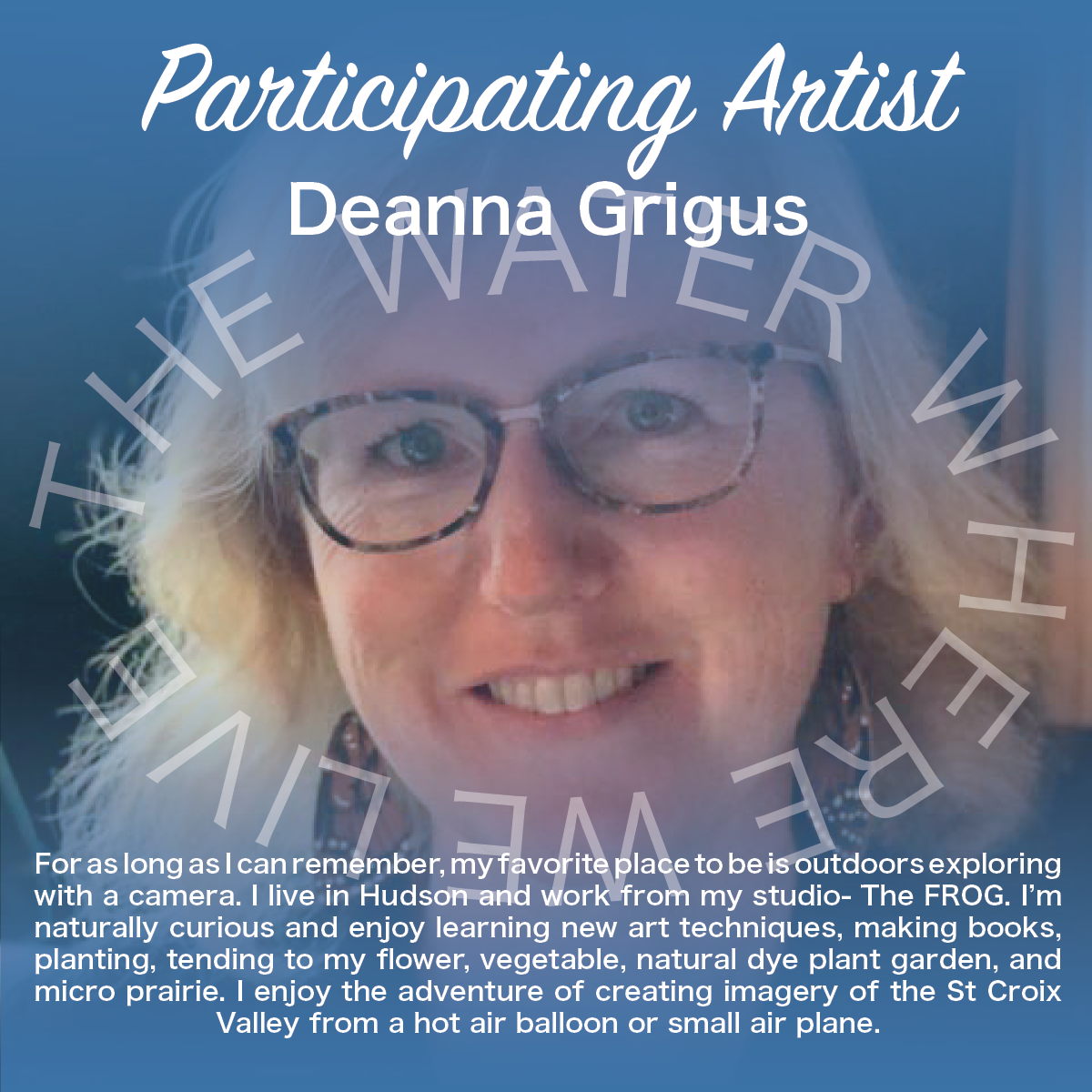
Blanding's Turtle - Deanna Grigus
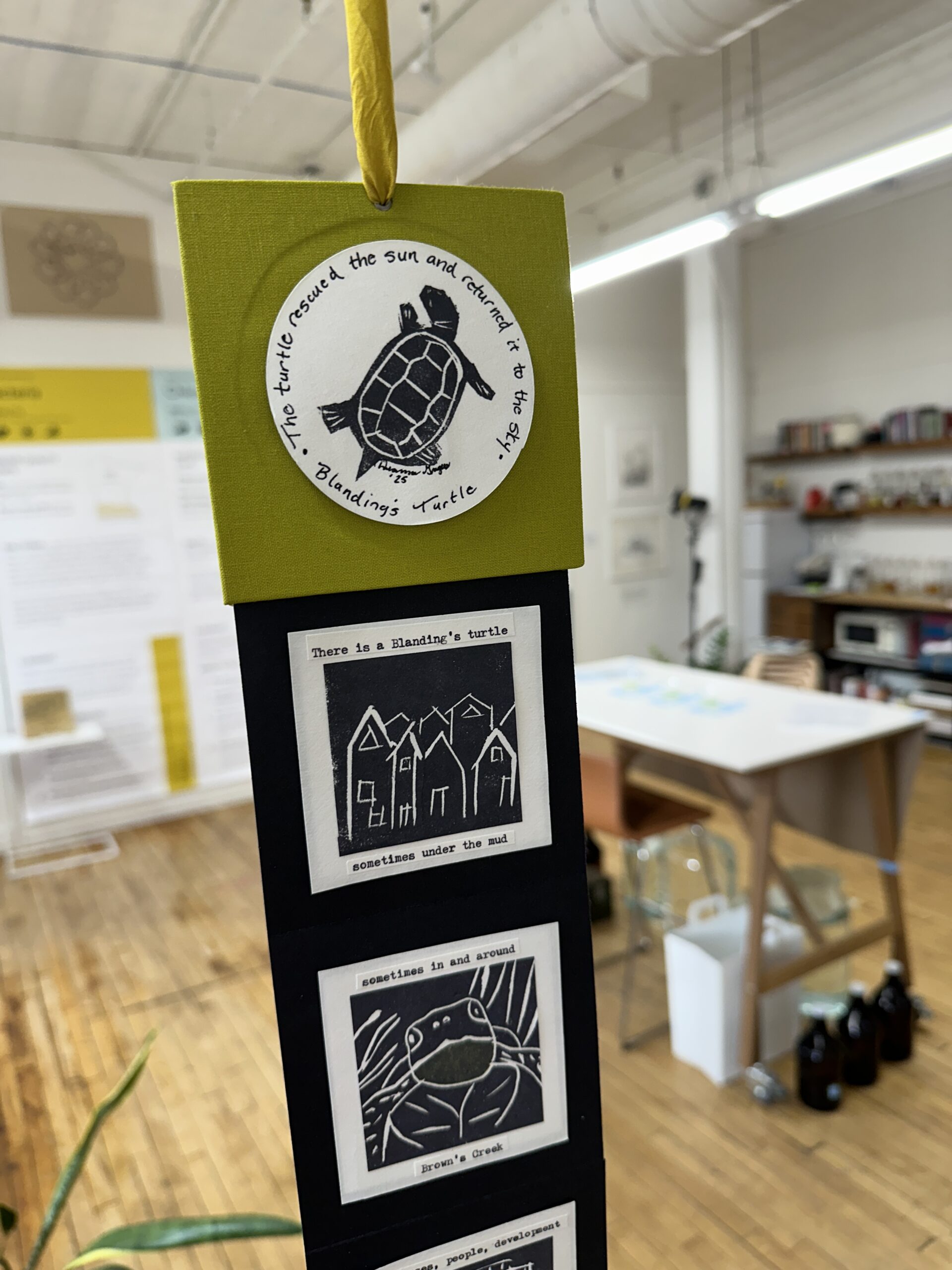
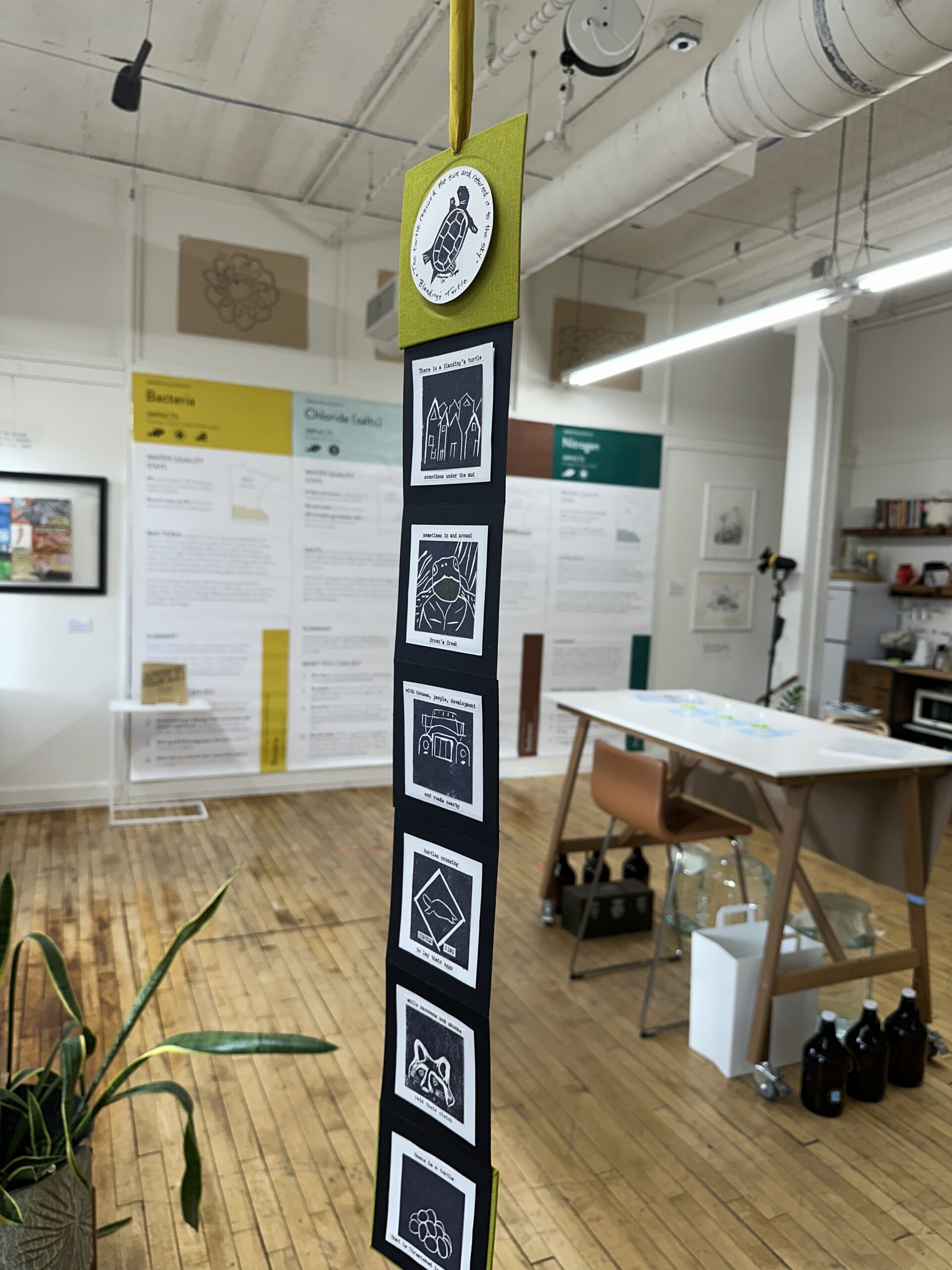
Deanna Grigus created a unique accordion booklet titled "There is a Turtle" about the endangered Blanding’s Turtle with linocut images and silk ribbon dyed with Marigolds. Deanna said "My earliest memories of turtles are watching the baby painted turtles in the aquariums at the Woolworths, and my Mom reading me I Have a Turtle. As a teen, I acquired a painted turtle (Maynard) from an animal behavior unit in biology class and he was with me for 21 years even with a heart condition requiring Lasik daily. I was unfamiliar with the Blanding’s Turtle when I joined The Water Where We Live project, but I have acquired much information during my research to create art that I’m hoping will raise awareness and help these amazing turtles."
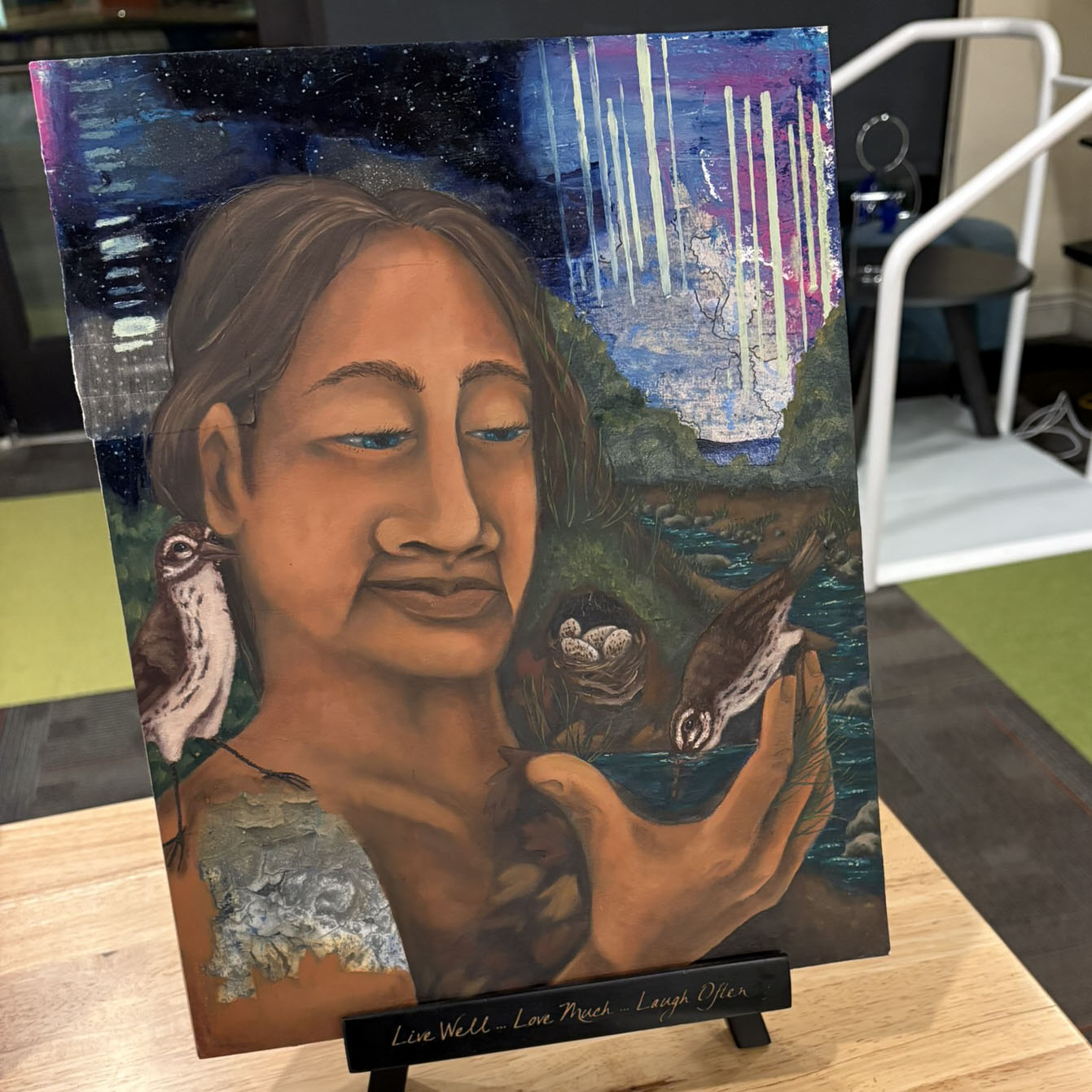
Louisiana Waterthrush - Jennifer Osborne Anderson
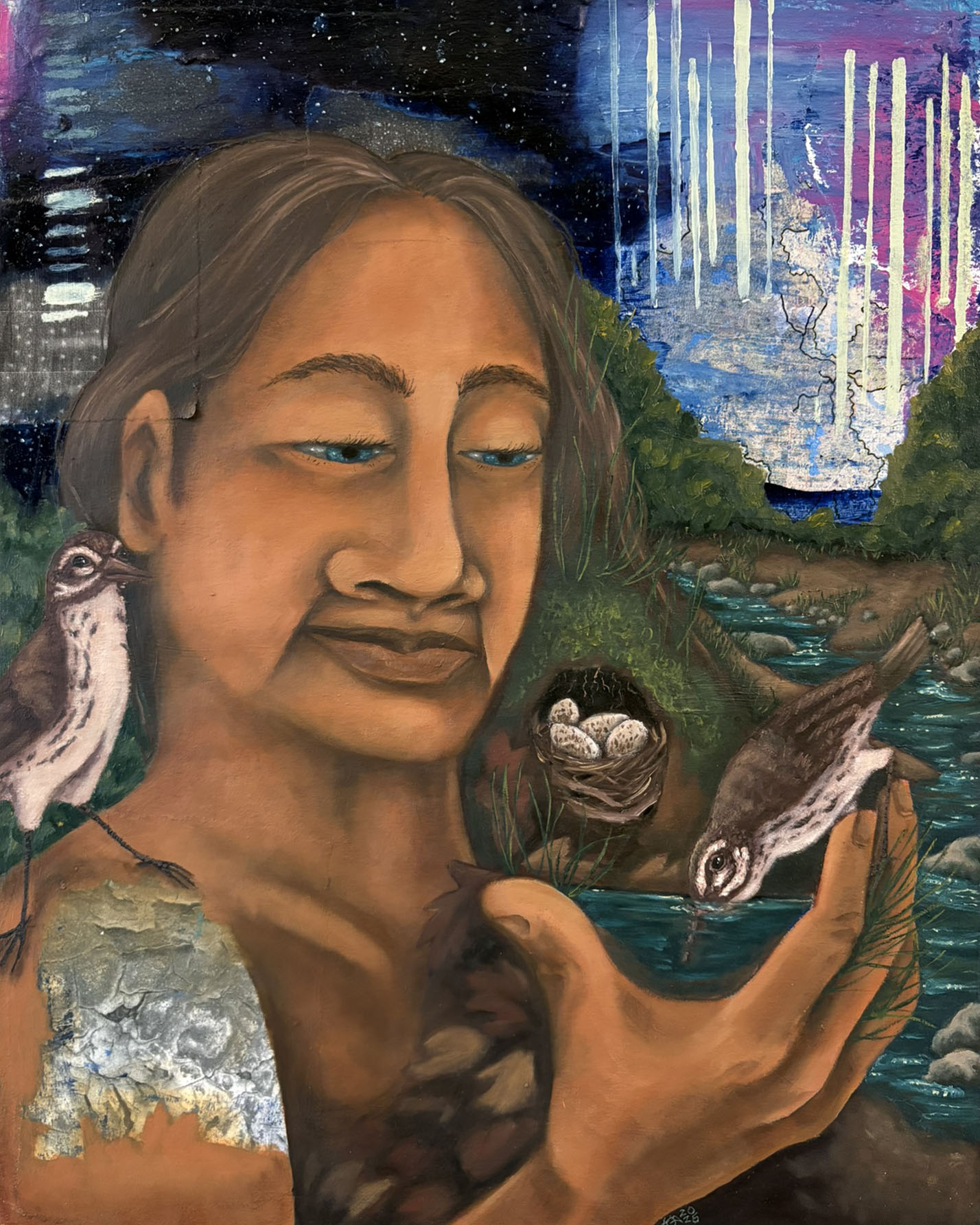
Jennifer Anderson's artwork titled "In the earth and by the water" focuses on the Louisiana Waterthrush using mixed media and oil on paper. The piece explores the birds’ relationship with the earth and water. Jennifer stated that "The Louisiana waterthrush caught my attention when I read about how it nested close to the water’s edge, under an uprooted tree or in the bank. Though it is a vulnerable spot to raise your young, I love the idea that they are swaddled by the earth. They begin life and live life by the water’s edge, flowing south in the winter and north in the summer."
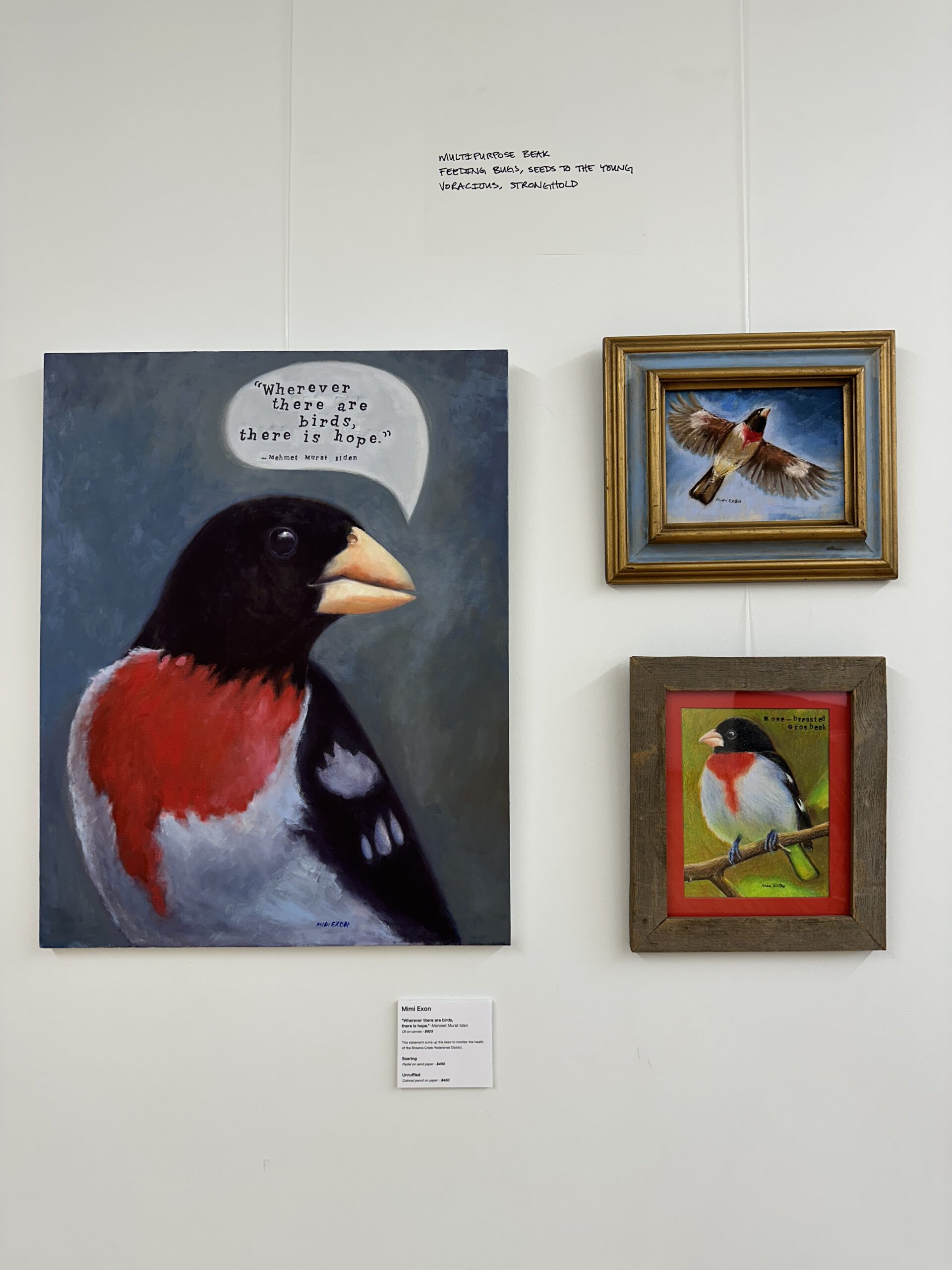
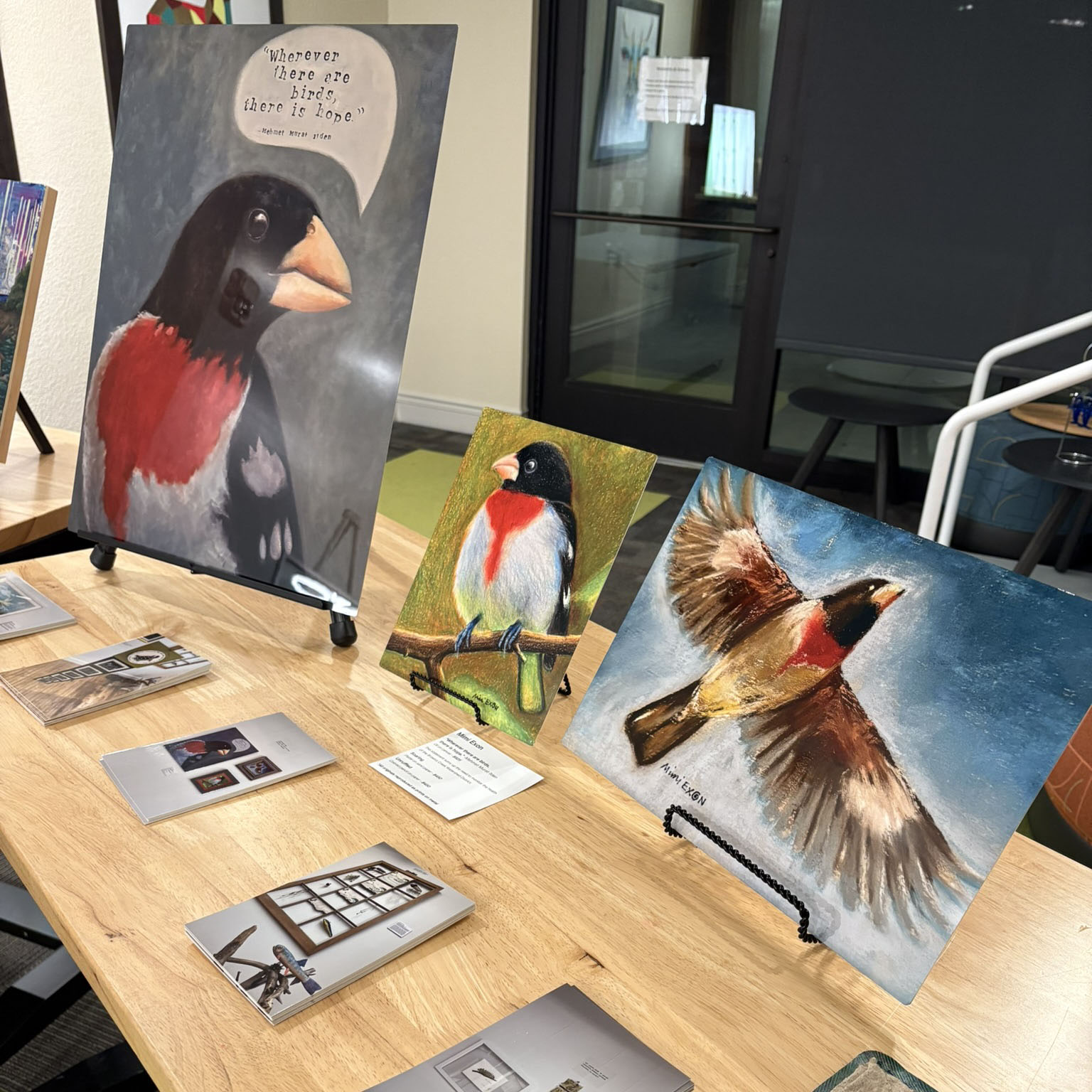
Rosebreasted Grosbeak - Mimi Exon
Mimi Exon chose to create not one, but three different works on the Rosebreasted Grosbeak. These works include an oil on canvas painting titled "Wherever there are birds, there is hope" (Quote by Mehmet Murat Ilden), which sums up the need to monitor the health of the Brown's Creek Watershed District. The other two pieces are "Soaring" drawn with pastel on sandpaper and "Unruffled" drawn with colored pencil on paper. For the later exhibits, the pieces were re-produced on metal panels.

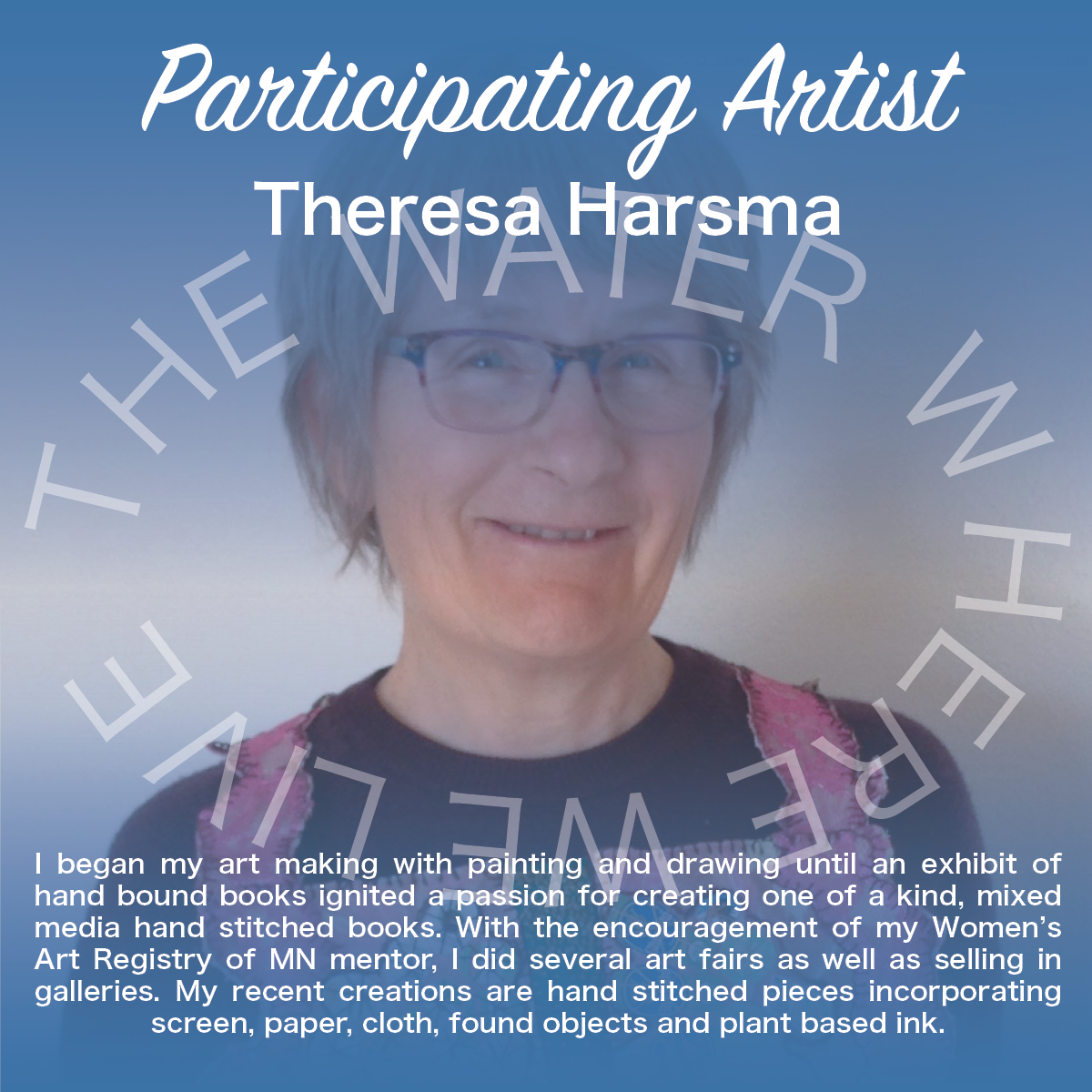
Cecropia Silk Moth - Theresa Harsma
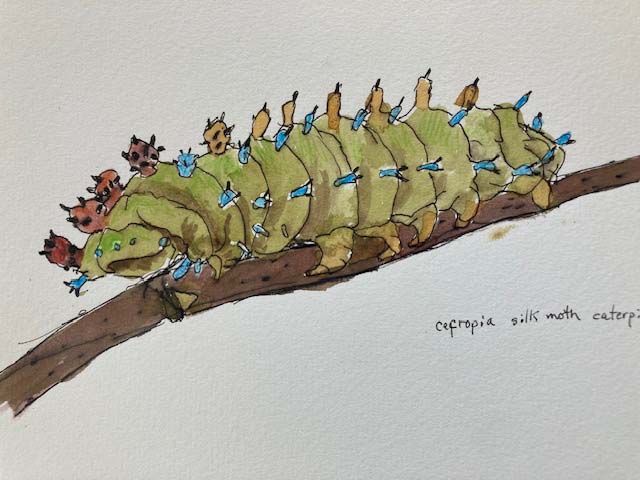
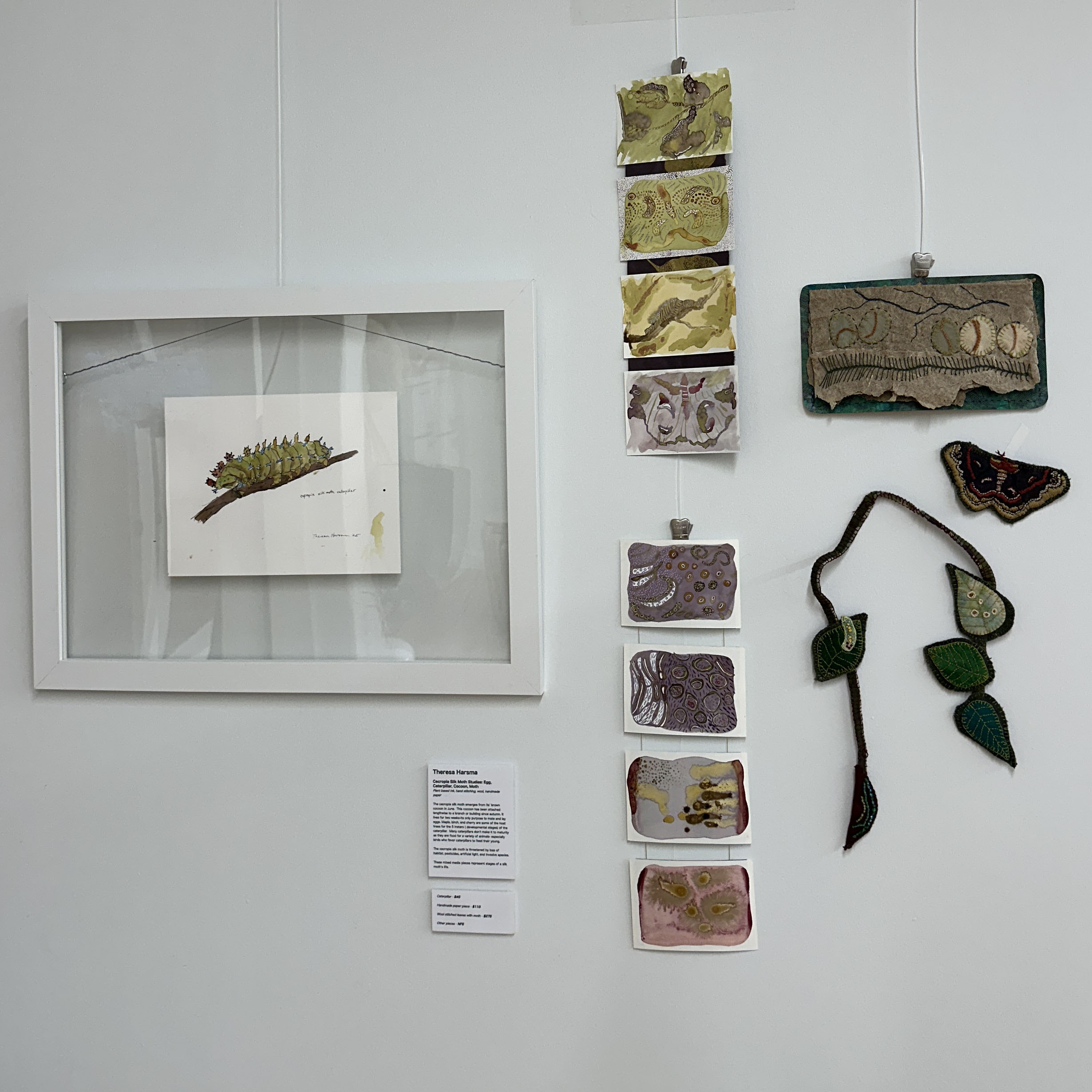
Theresa Harsma submitted a series of works titled "Cecropia Silk Moth Studies: Egg, Caterpillar, Cocoon, Moth" with materials including plant-based ink, hand stitching, wool, and handmade paper. The cecropia silk moth emerges from its brown cocoon in June. This cocoon has been attached lengthwise to a branch or building since autumn. It lives for two weeks-its only purpose to mate and lay eggs. Maple, birch, and cherry are some of the host trees for the 5 instars (developmental stages) of the caterpillar. Many caterpillars don’t make it to maturity as they are food for a variety of animals- especially birds who favor caterpillars to feed their young. The cecropia silk moth is threatened by loss of habitat, pesticides, artificial light, and invasive species. These mixed media pieces represent stages of a silk moth’s life.
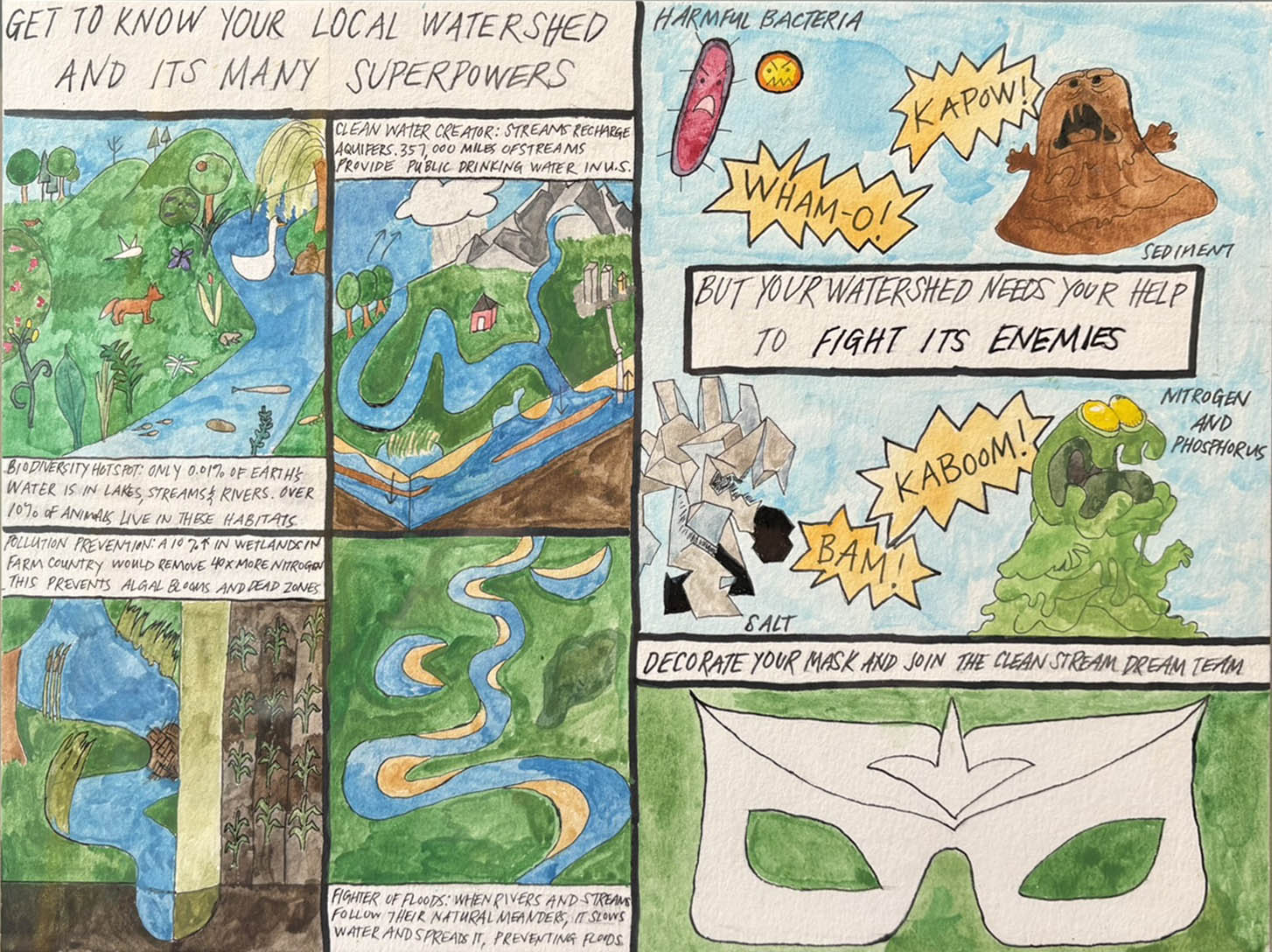
Caddisfly - Amy Walsh
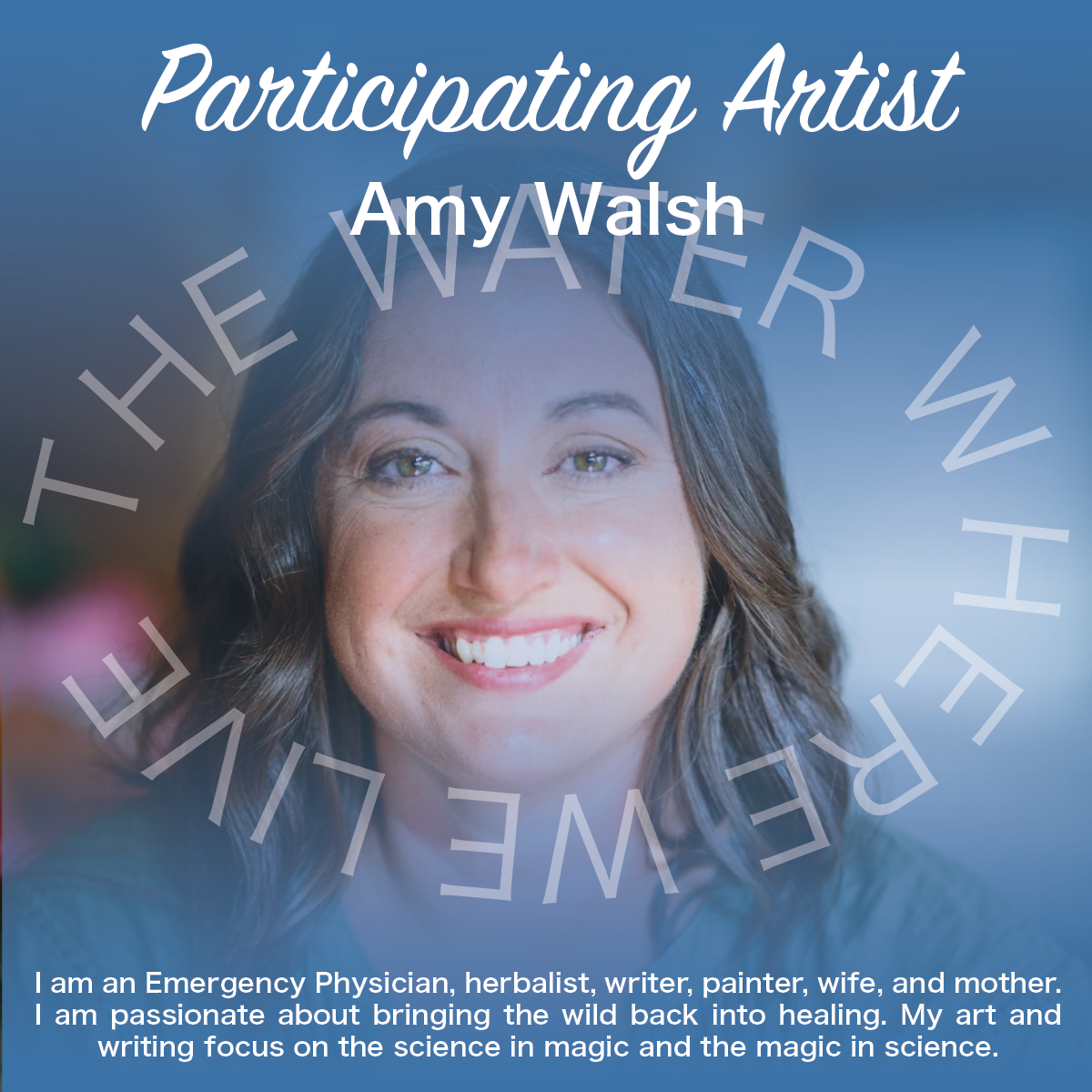
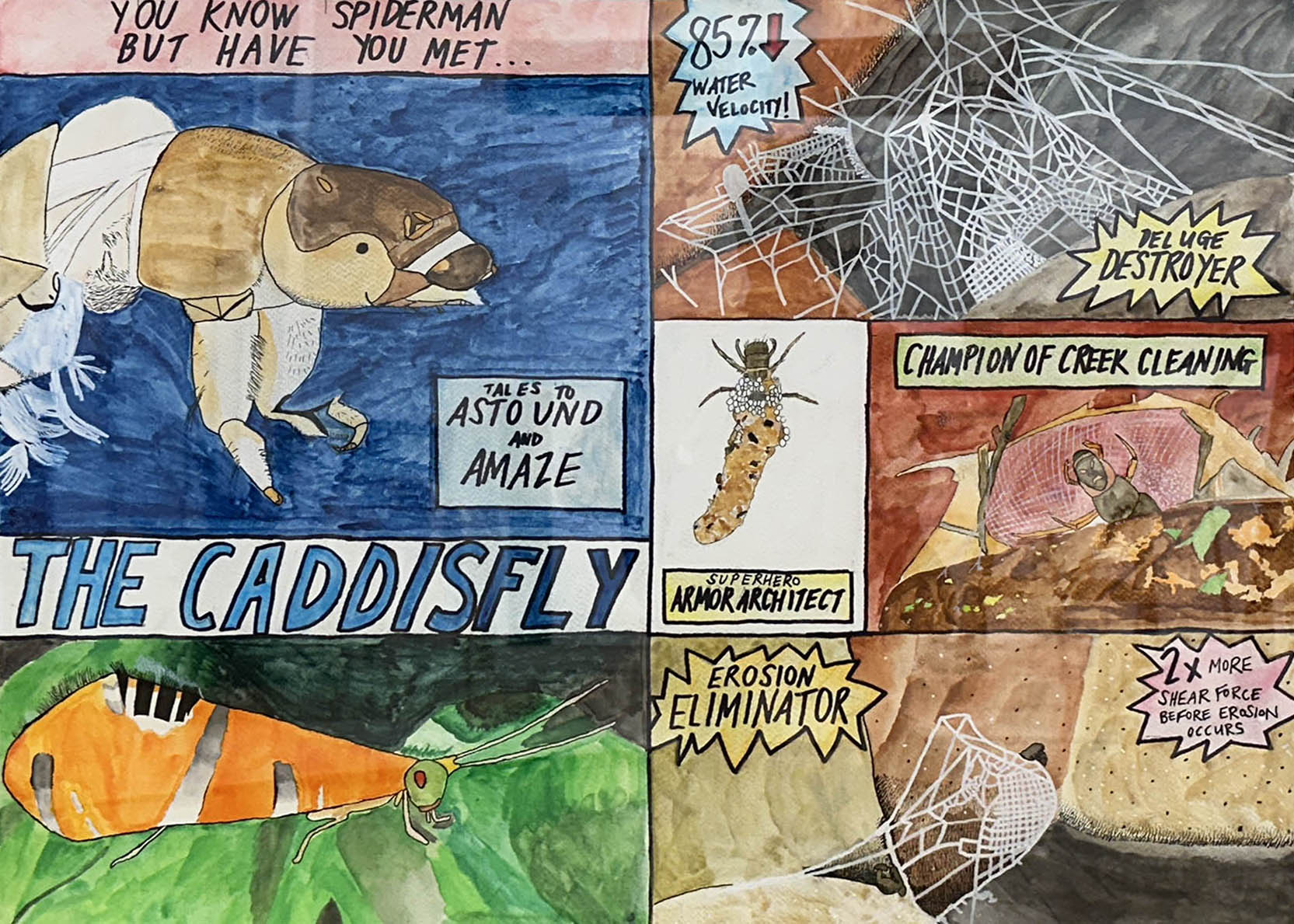
Amy Walsh was inspired by a children’s comic when depicting the Caddisfly in her artwork titled "Caddisfly: Stream Superhero," with watercolor and marker. Her work was also turned into a coloring book. Amy said "Learning about all of the amazing skills and structures caddisflies bring to their homes, immediately brought to mind some of my favorite children’s books. These books share amazing features of animals as if they were superpowers, which inspired me to look at caddisflies as if they were comic book heroes"
Rainbow Darter - Robin Stumbo
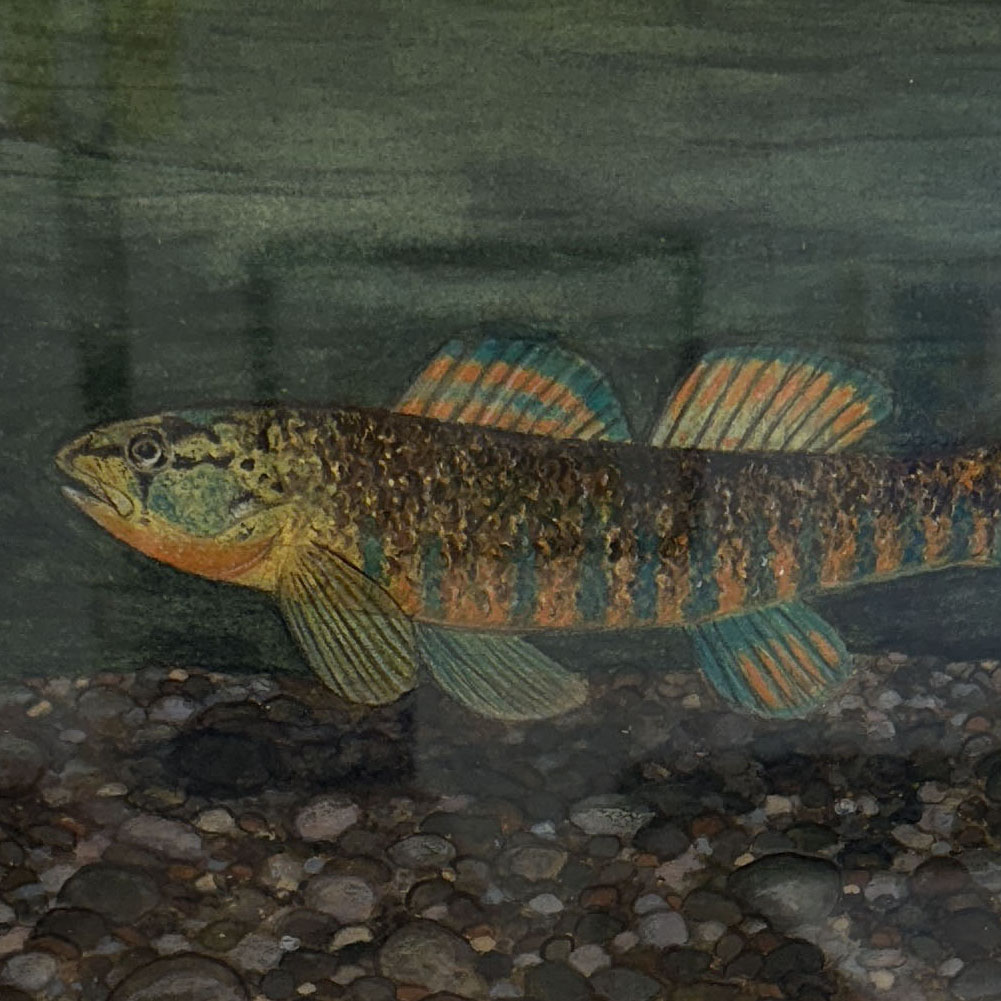
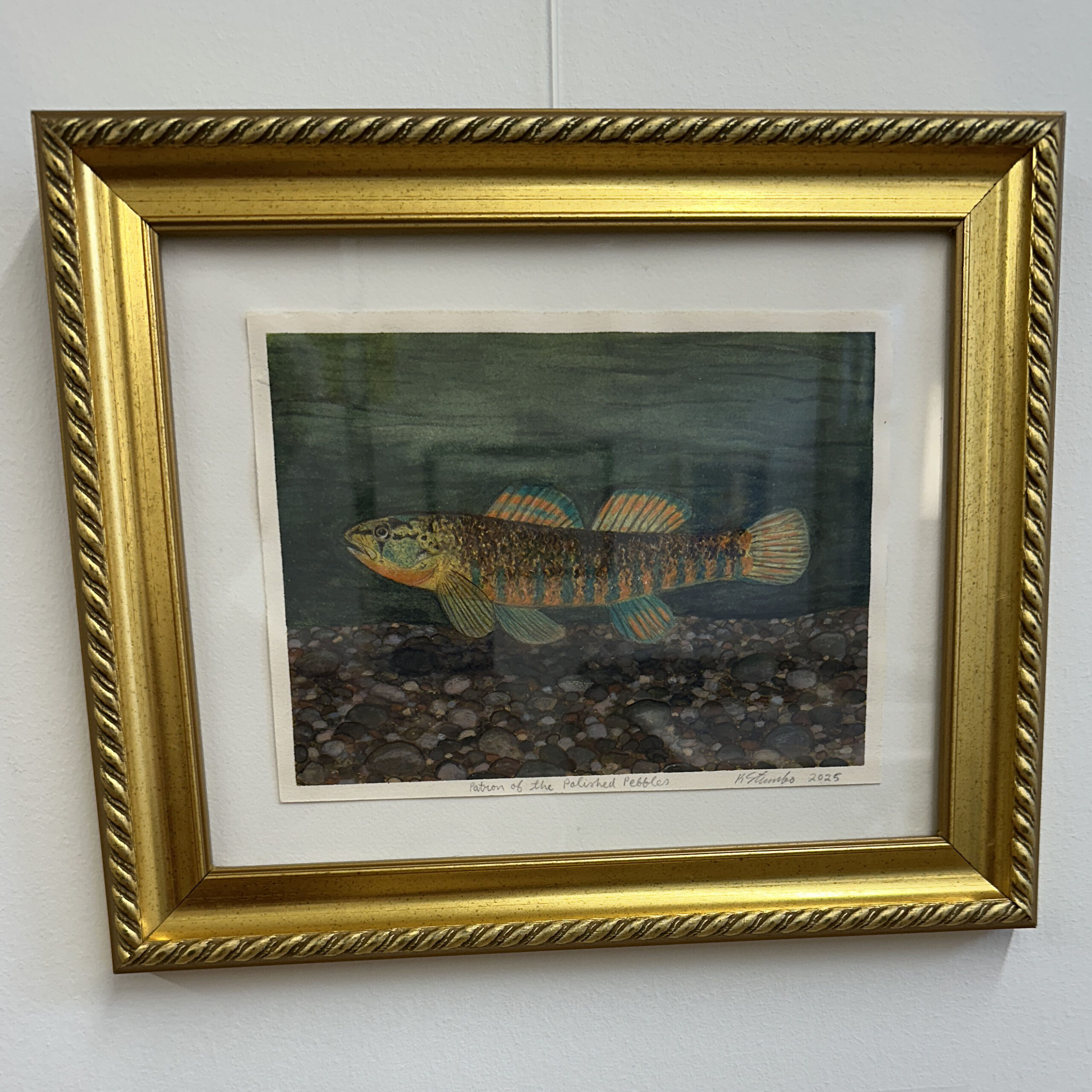
Robin Stumbo's work, created with gouache and colored pencil, is titled "Patron of the Polished Pebbles." This piece depicts a male rainbow darter during the spawning season: their bright teal and orange coloration is a signal to females that they are in good health and ready to mate. Just as these vibrant colors are a sign that the darter is a healthy and fit mate, the presence of these fish in a stream is an indicator of good water health, as they are very sensitive to pollution and silt.
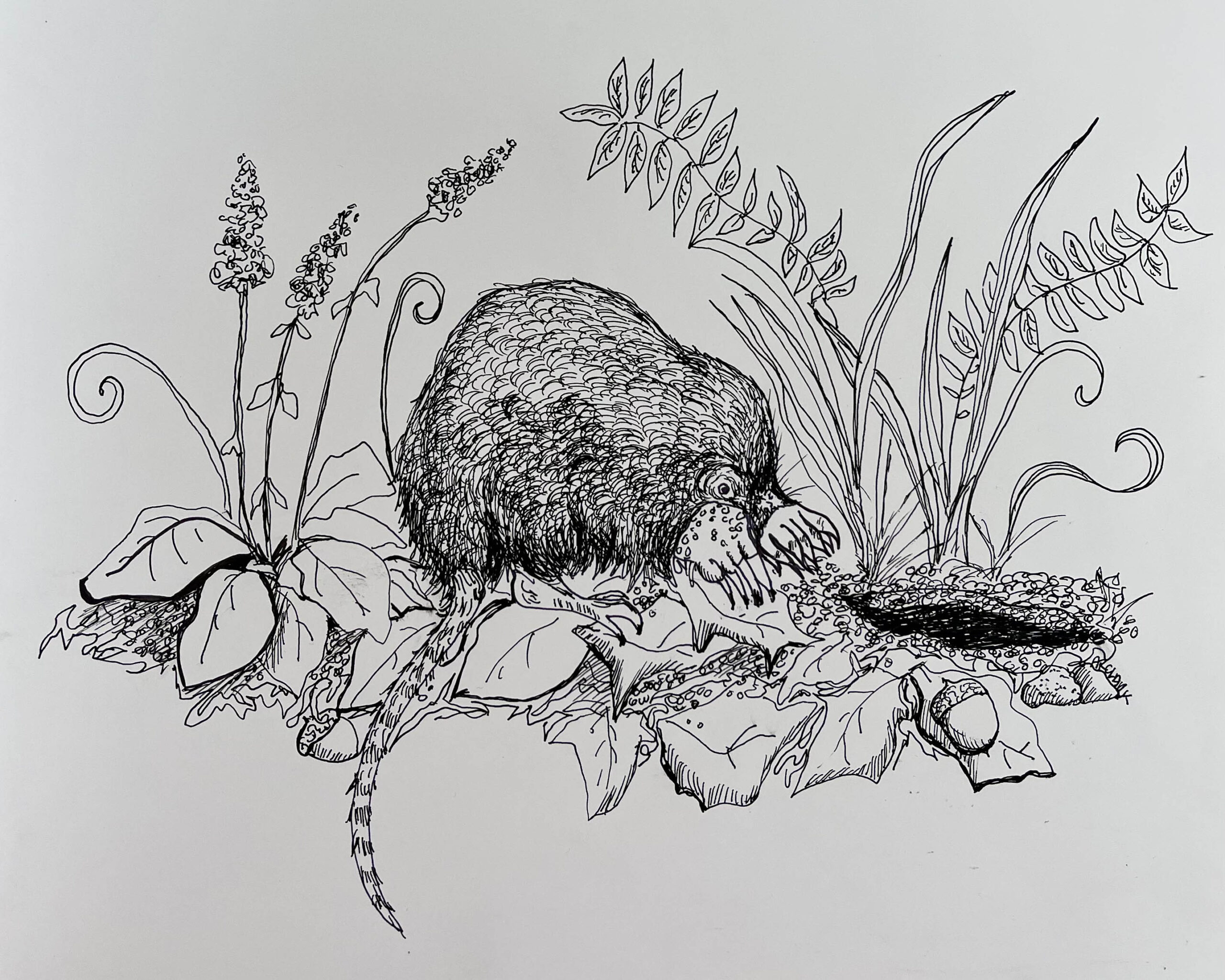
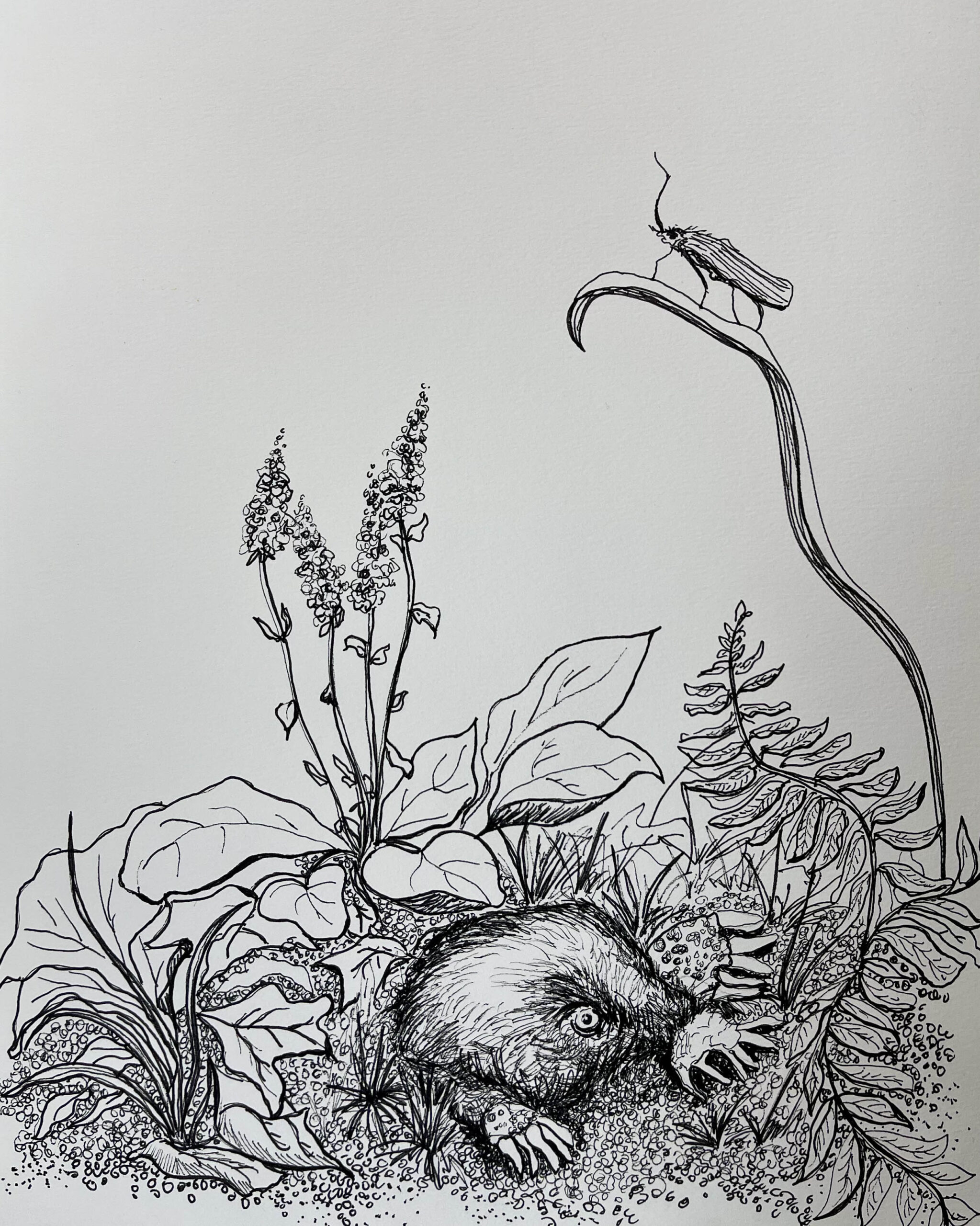
Star-nosed Mole - Amy R. Clark
Amy Clark created two detailed drawings titled "Star-nosed Mole Explores" using pen and ink and watercolor paper showing the mole in its habitat. This whimsical creature is always on the hunt for something to fill his belly. Essentially blind, but equipped with a nose that has highly sensitive touch organs that can sense prey and feel its way to a path. Inquisitive in nature and equipped to tunnel with paddle-like hands with sharp claws, they are also semi-aquatic and have the ability to smell underwater by breathing bubbles of air that they produce. This fascinating creature’s personality traits were captured in the lyrical strokes of pen & ink. The black and white illustration captures the curious, childlike explorative nature of the Star-nosed mole. They are also rendered as a fantastical creature that one would deem themselves extremely lucky to see in the wild.
Bladderwort - Jenny Elaine
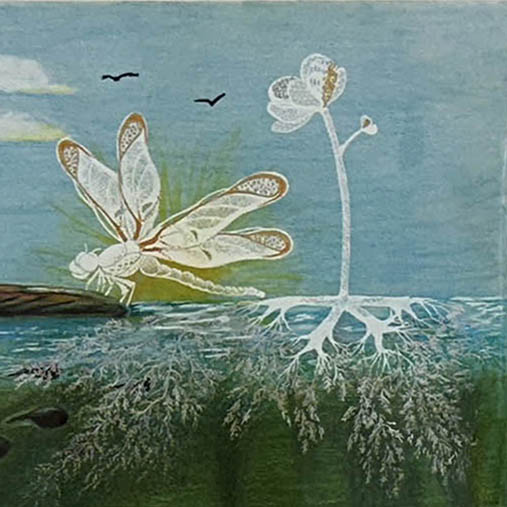
Jenny Elaine depicted the Bladderwort, a fragile, carnivorous plant that traps and feeds on small organisms with bladder-like structures, in this work titled "The Beauty & the Balance." Jenny used colored pencil, watercolor, metallic, and white gel ink pens to draw this unique plant alongside other organisms found in the Brown’s Creek Watershed District. According to Jenny "The bladderwort is fragile, and beautiful. Which is why I depict it in lace. It is 'part of the whole', and is as vital as the colorful fish and the dragonfly sitting close by. It’s what helps create the beauty and the balance."

Brook Trout - Jill Waterhouse
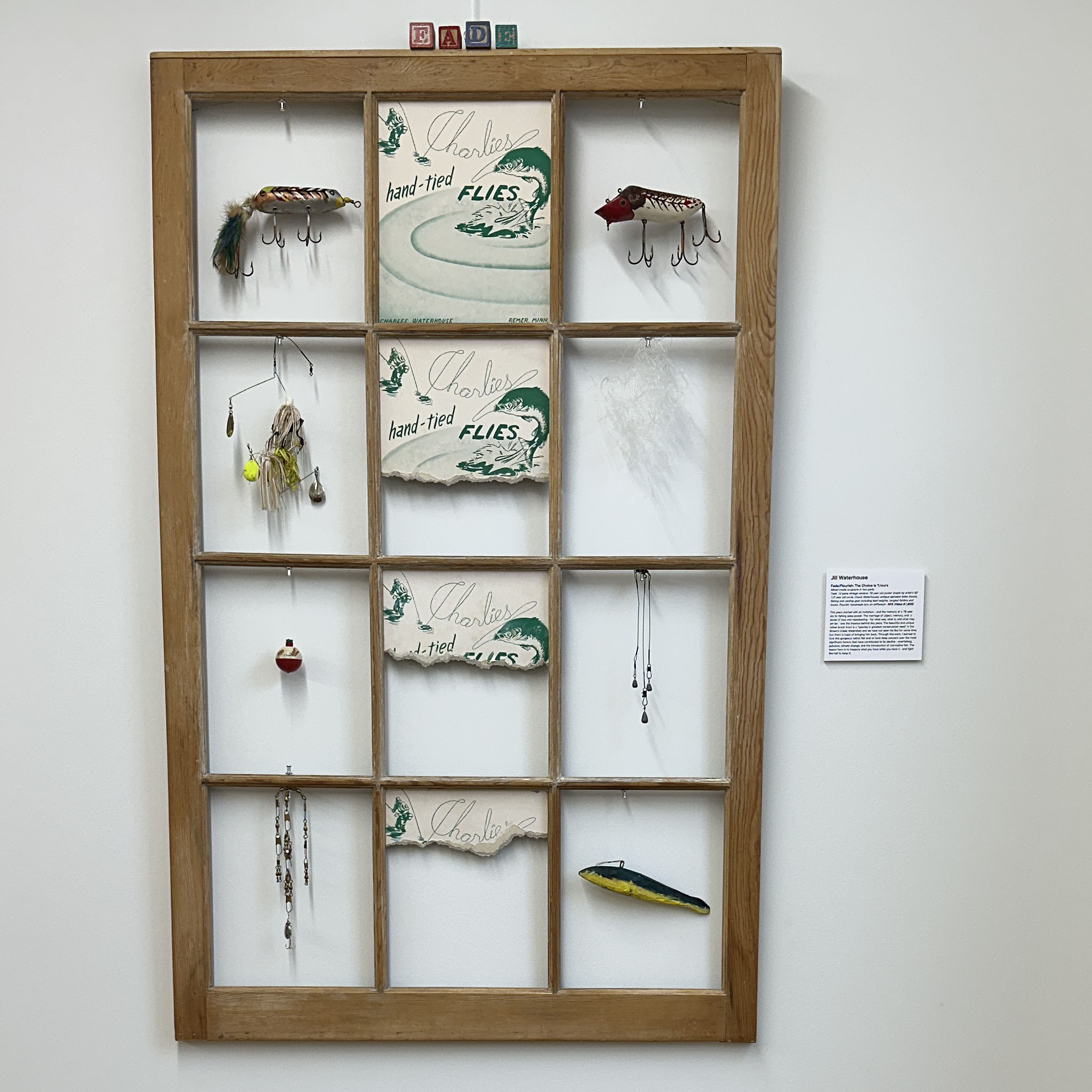
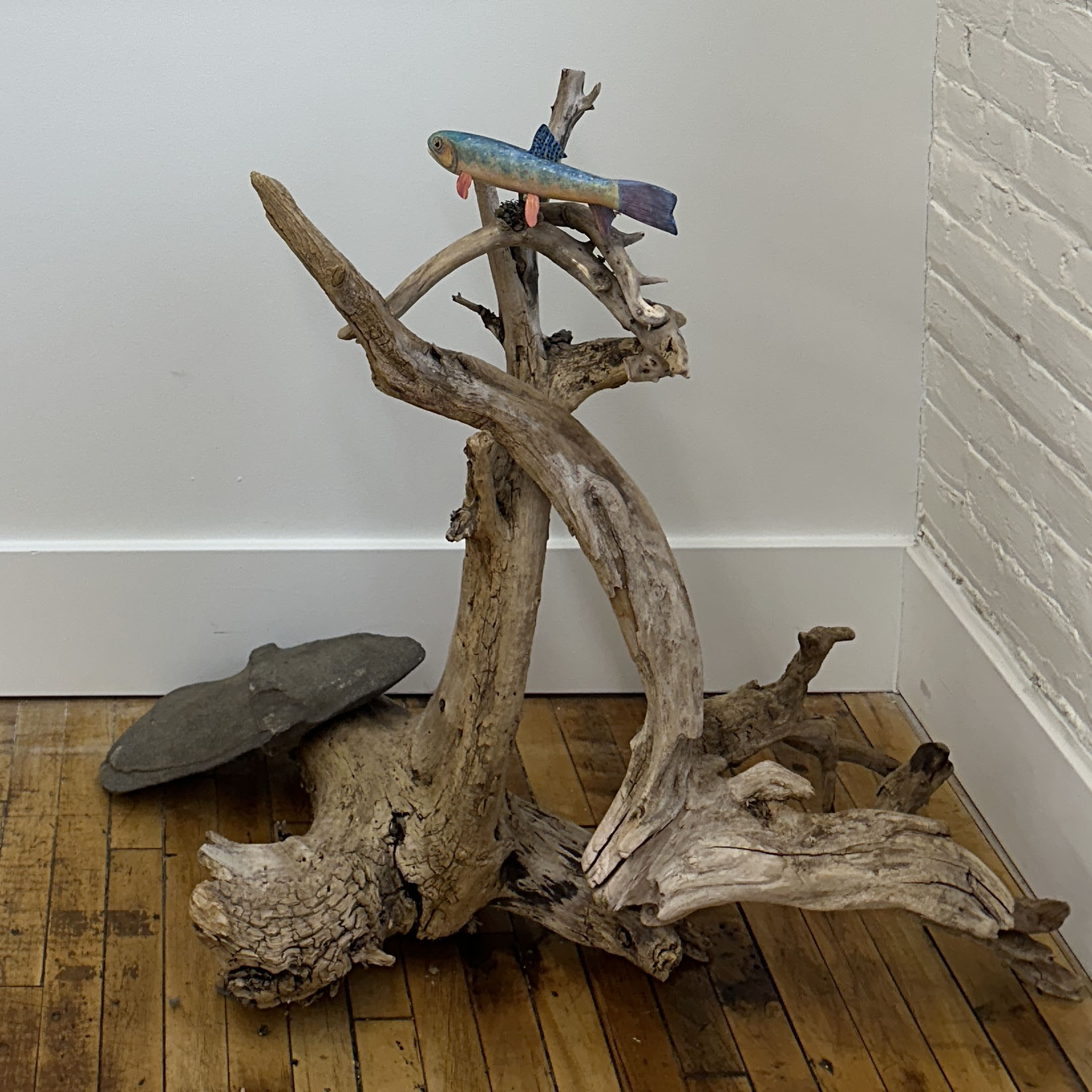
Jill Waterhouse created a couple sculptural pieces in her depiction of the Brook Trout titled "Fade/Flourish: The Choice is Y/ours." The first piece included a 12 pane vintage window, 78 year old poster (made by artist’s 92 1/2 year old uncle, Chuck Waterhouse), antique alphabet letter blocks, fishing and casting gear including lead weights, tangled fishline and hooks. The second piece was a handmade lure on driftwood. Jill shared "This piece started with an invitation – and the memory of a 78 year old fly fishing sales poster. The marriage of object, memory, and a sense of loss and reawakening - for what was, what is, and what may yet be – was the impetus behind this piece. The beautiful and unique native brook trout is a 'species in greatest conservation need' in the Brown’s Creek Watershed and we have not seen his like for some time, but there is hope of bringing him back. Through this work, I learned to love this gorgeous native fish and to have deep concern over the most significant factors that have contributed to its decline – overfishing, pollution, climate change, and the introduction of non-native fish. The lesson here is to treasure what you have while you have it - and fight like hell to keep it."
Hooded Warbler - Megan Miller
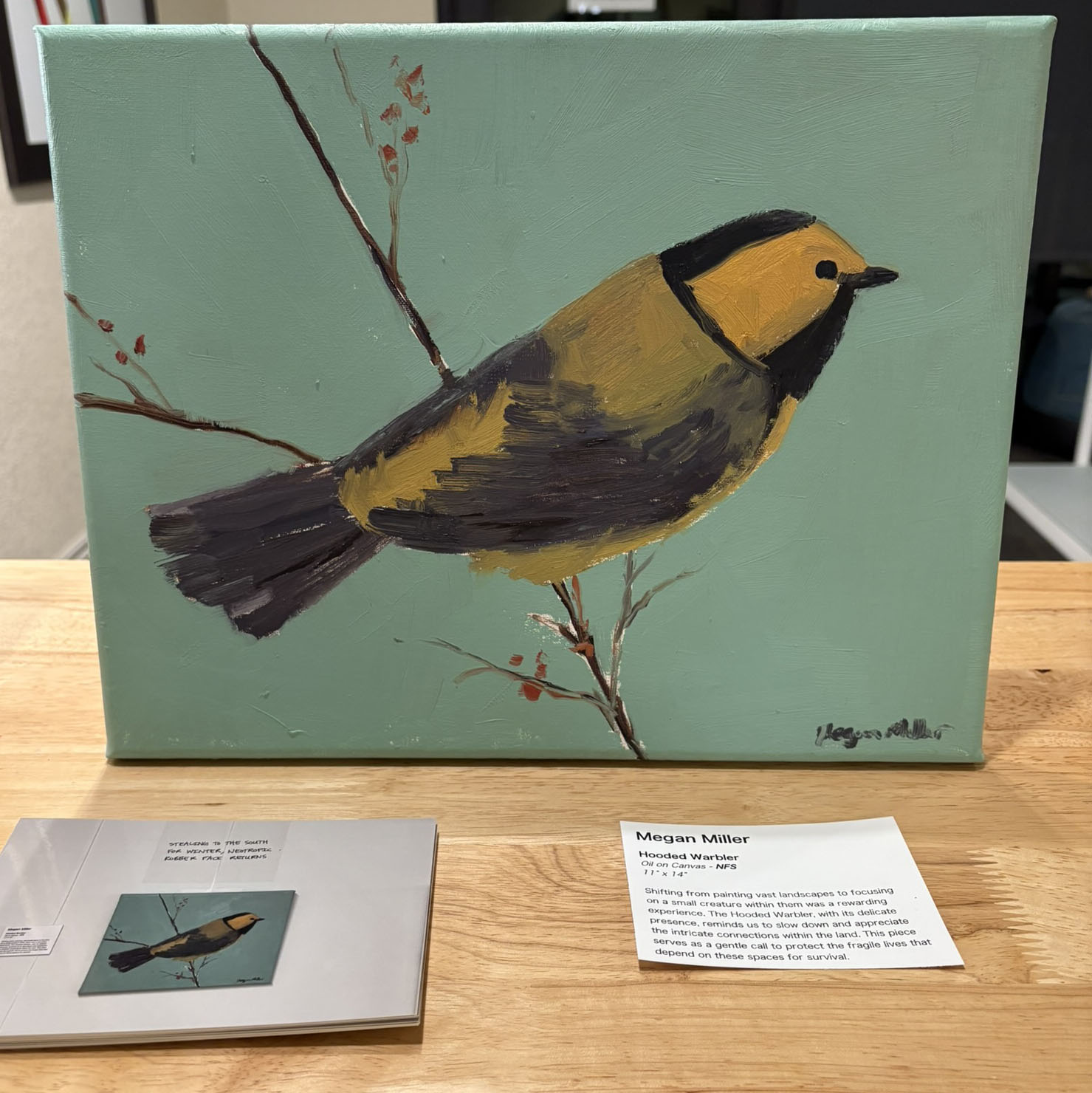
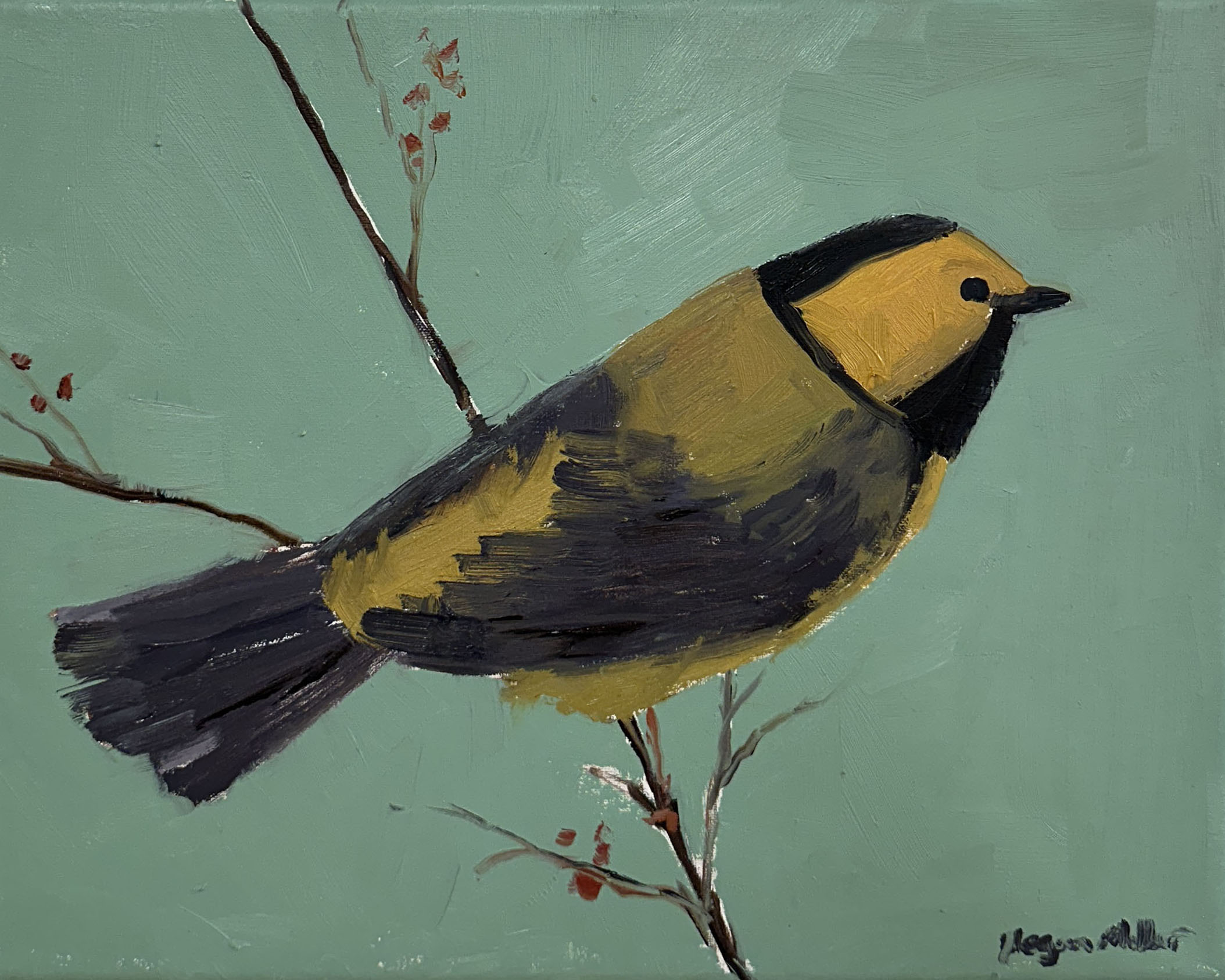
Megan Miller chose to depict the Hooded Warbler with oil paint on canvas. This is a bird species that calls Brown’s Creek Watershed District home during part of the year, but migrates south in the winter. Megan Miller shared that shifting from painting vast landscapes to focusing on a small creature within them was a rewarding experience. The Hooded Warbler, with its delicate presence, reminds us to slow down and appreciate the intricate connections within the land. This piece serves as a gentle call to protect the fragile lives that depend on these spaces for survival.
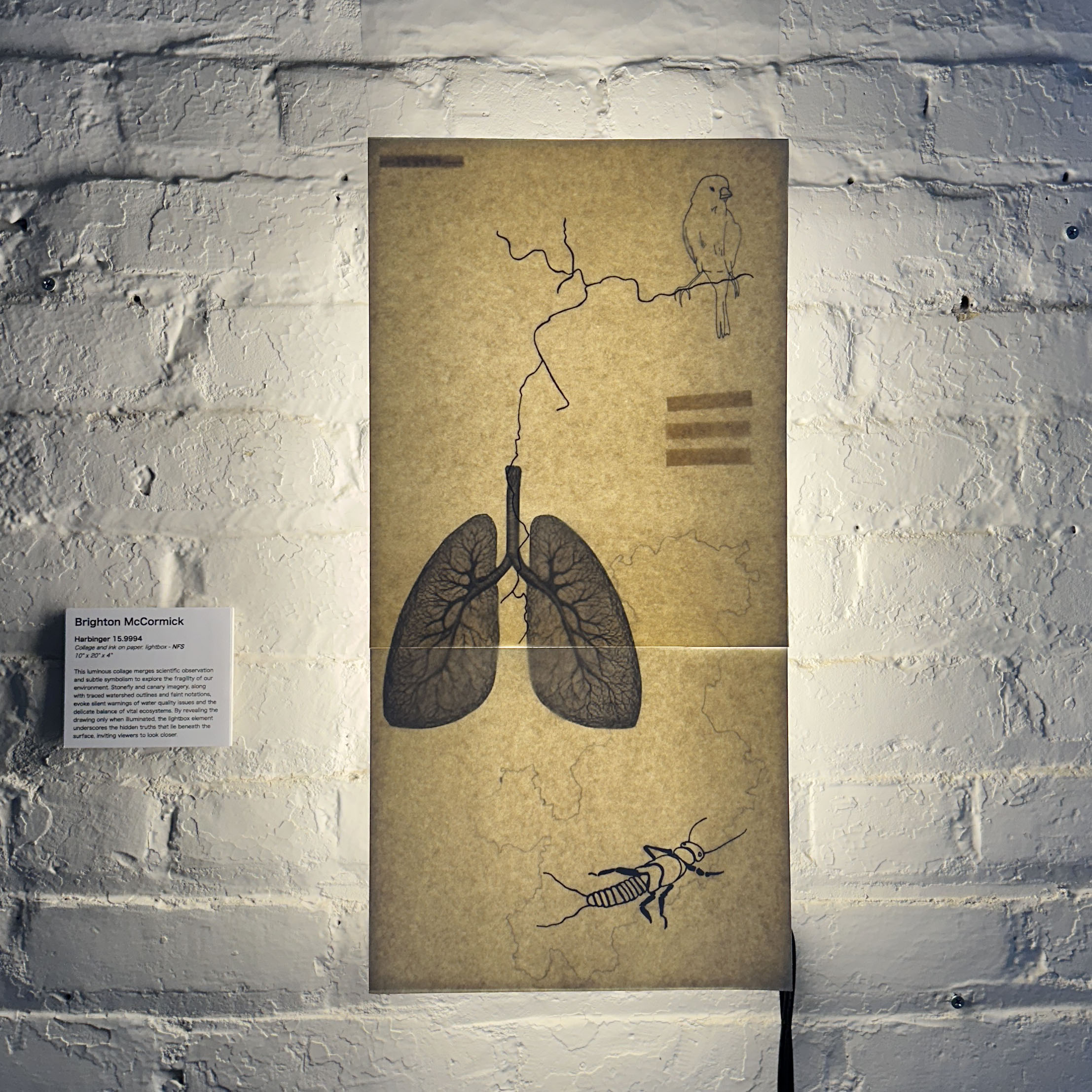
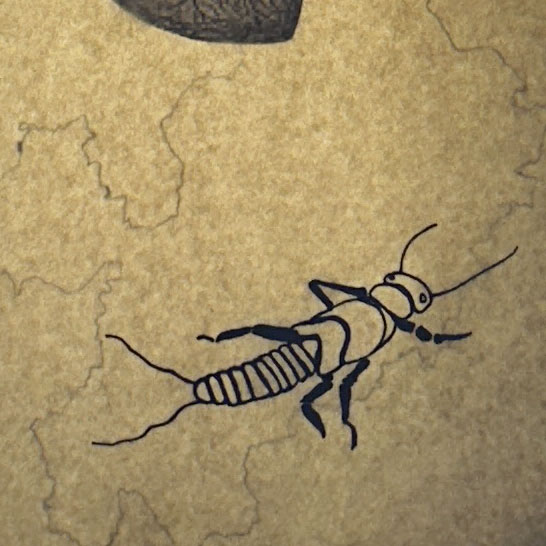
Stonefly - Brighton McCormick
Brighton McCormick created "Harbinger 15.9994," a unique work of art depicting the Stonefly using collage and ink on paper and a lightbox. This luminous collage merges scientific observation and subtle symbolism to explore the fragility of our environment. Stonefly and canary imagery, along with traced watershed outlines and faint notations, evoke silent warnings of water quality issues and the delicate balance of vital ecosystems. By revealing the drawing only when illuminated, the lightbox element underscores the hidden truths that lie beneath the surface, inviting viewers to look closer.
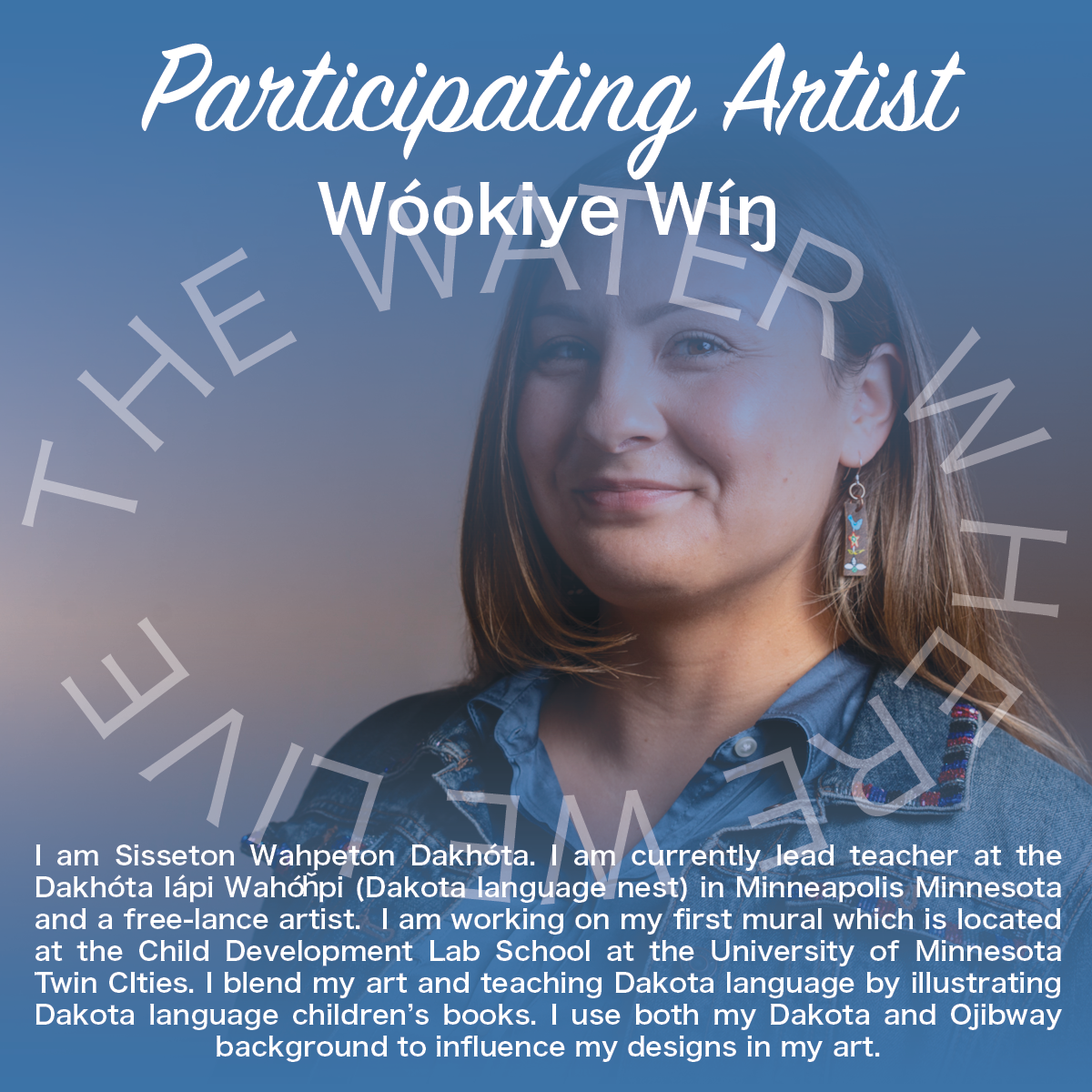
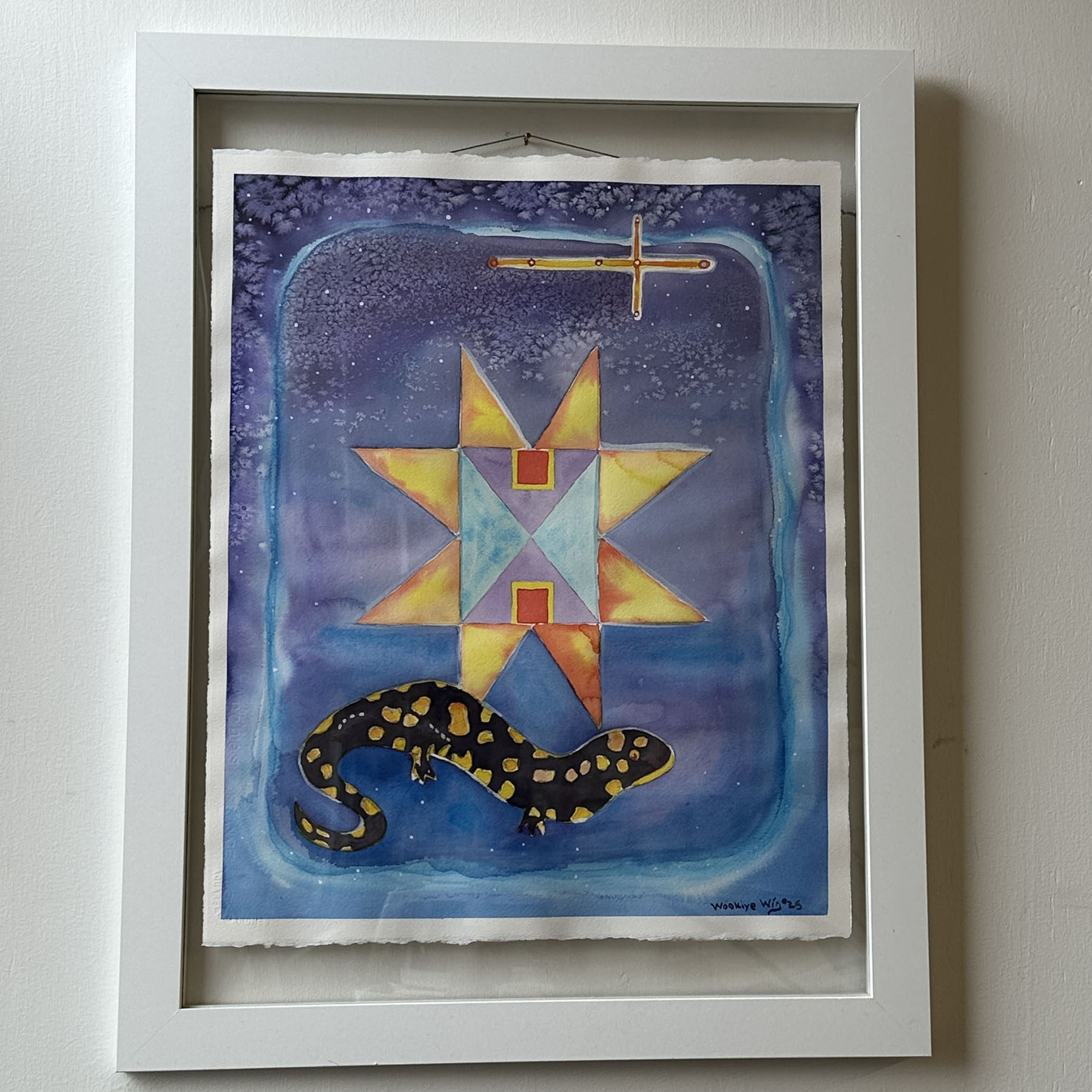
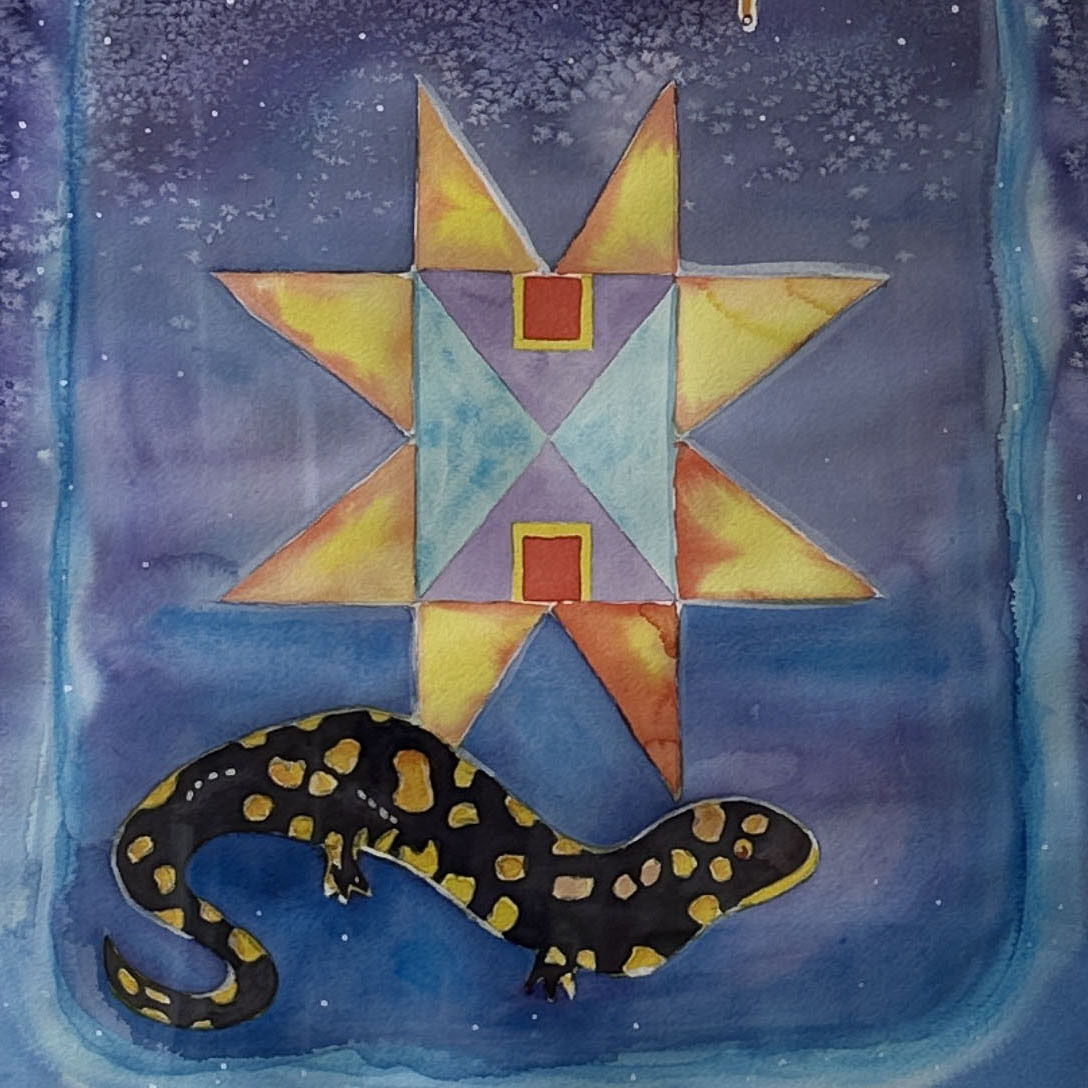
Tiger Salamander - Wóokiye Wíŋ
Wóokiye Wíŋ used her tribal background to influence her work titled "Áhdéška" created with watercolor and gouache on cold pressed paper. According to Wóokiye Wíŋ "The ahdéška, (tiger salamander in Dakhóta language) is amazingly regenerative as it can grow back not only his tail but limbs as well. His resilience, speed and ferocious hunting abilities are prized by Dakhóta people as masculine qualities that they seek for their sons to embody. For the Dakhóta, ahdéšksa not only resides in the wetlands dry land of our homelands, but is reflected in the sky above within an adhéška constellation (mainly known as cygnus constellation)."