Project Overview
Brown's Creek Watershed District worked with the Minnesota Department of Natural Resources (Waters, Fisheries, and Trails) and the City of Stillwater to improve the trout stream habitat in Brown's Creek, which is listed as impaired for lack of cold water fish and macroinvertebrates. The project restored 2,500 linear feet of Brown’s Creek from McKusick Road just upstream of Brown’s Creek Park to just downstream of the Brown’s Creek State Trail, with goals to reduce erosion and sediment loading by 15 tons per year and nutrient loading by 15 pounds per year of total phosphorus to the trout stream and the St. Croix River, as well as improve 16.5 acres of riparian habitat, and provide stream access for fishing and passive recreation.
This project began with tree and shrub removal in early 2024, stream restoration in summer 2024, continued invasive species management in fall 2024, native tree and shrub planting in spring 2025, and access points completed in summer 2025.

Cost and Funding
The estimated total cost for the project (including engineering and construction) is $451,800.
- Local Levy: $111,100
- MN DNR “Get Out MORE” Grant: $20,000
- MPCA 319 Grant: $320,700.
Of the total project cost $347,400 will be used for construction and $104,400 for planning, design, engineering, permitting, and construction oversight.
Project Benefits
The anticipated benefits of the restored stream include:
- Reduced bank erosion and subsequent sediment and nutrient loading to the creek and the St. Croix River.
- Improved Habitat:
- Rock riffles increase fish spawning opportunities and provide stable refuge for macroinvertebrates.
- More deeper pools provide thermal refuge for aquatic biota during the summer months and overwintering habitat for fish and amphibians.
- Instream woody structures provide fish and macroinvertebrate habitat and protect streambanks from erosion.
- Native seeding increases pollinator habitat, diversity, and extent of native vegetation over invasive species such as common buckthorn, reed canary grass, and garlic mustard.
- A reconnected floodplain improves wetland hydrology and helps rehabilitate native riparian vegetation.
- The establishment of brush piles and snag trees provides refuge for non-game species like small mammals, reptiles, and birds.
- Improved access for fishing and recreation.
Restoration Process and Timeline
Assessing Existing Conditions
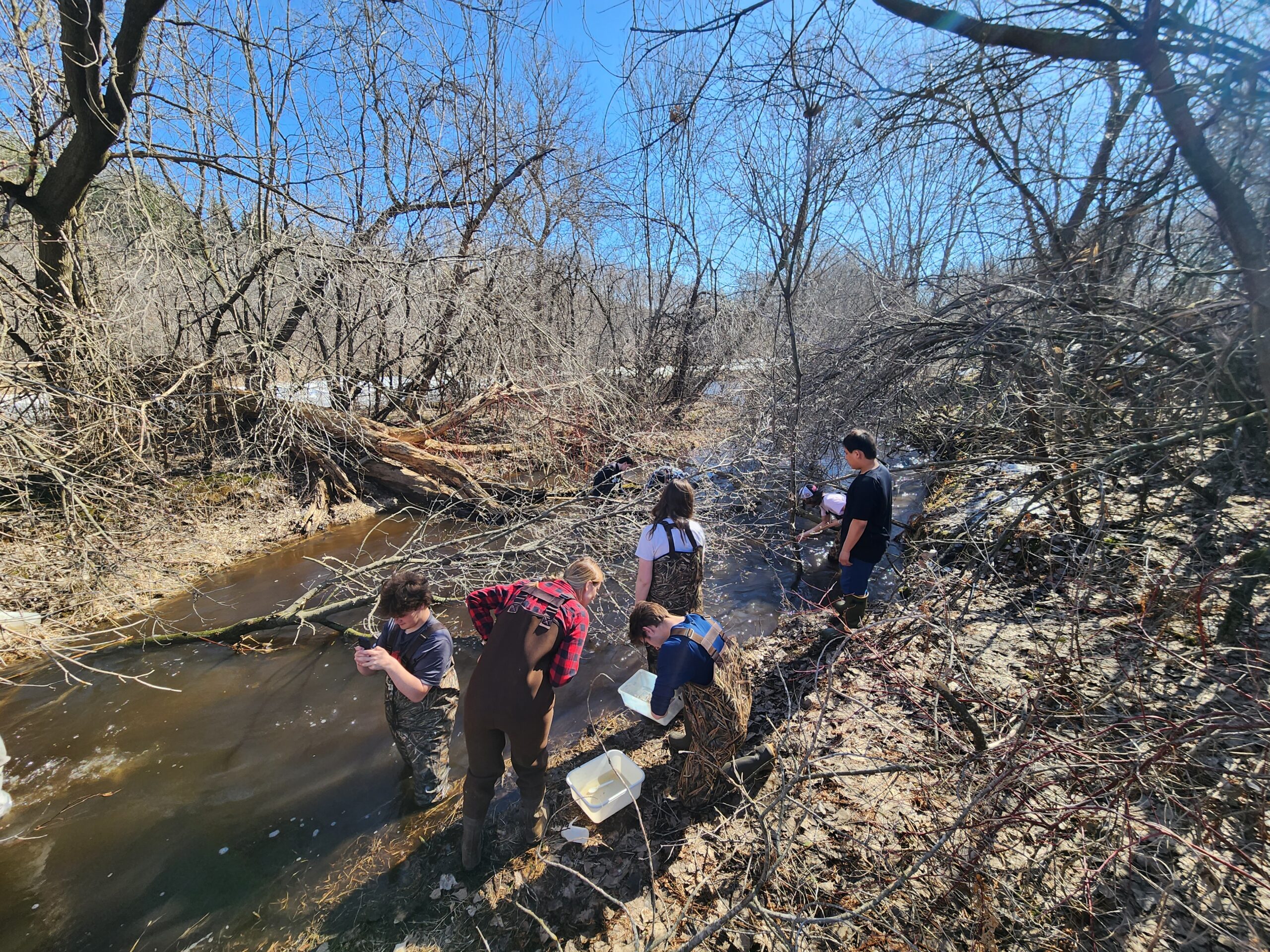
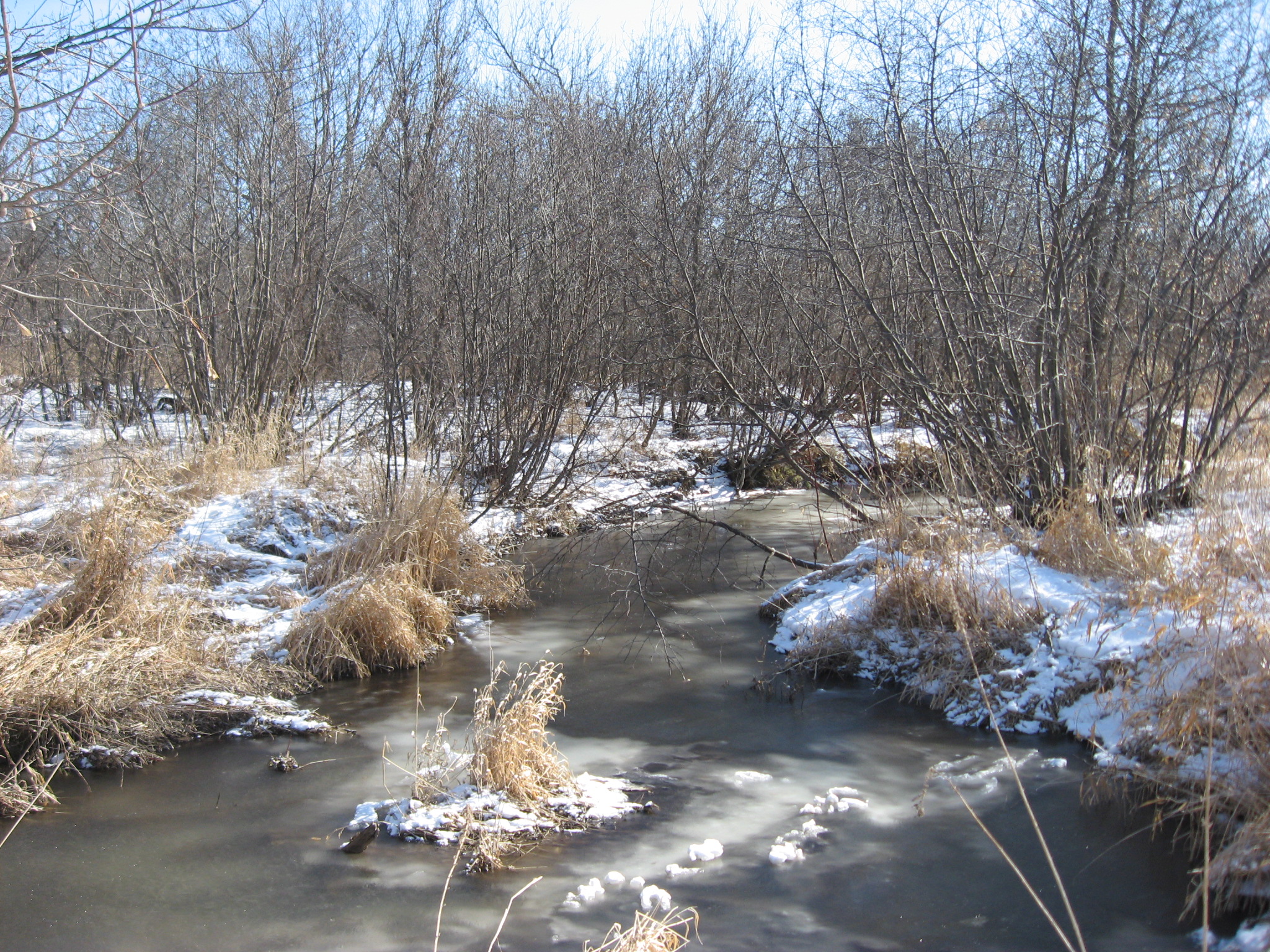
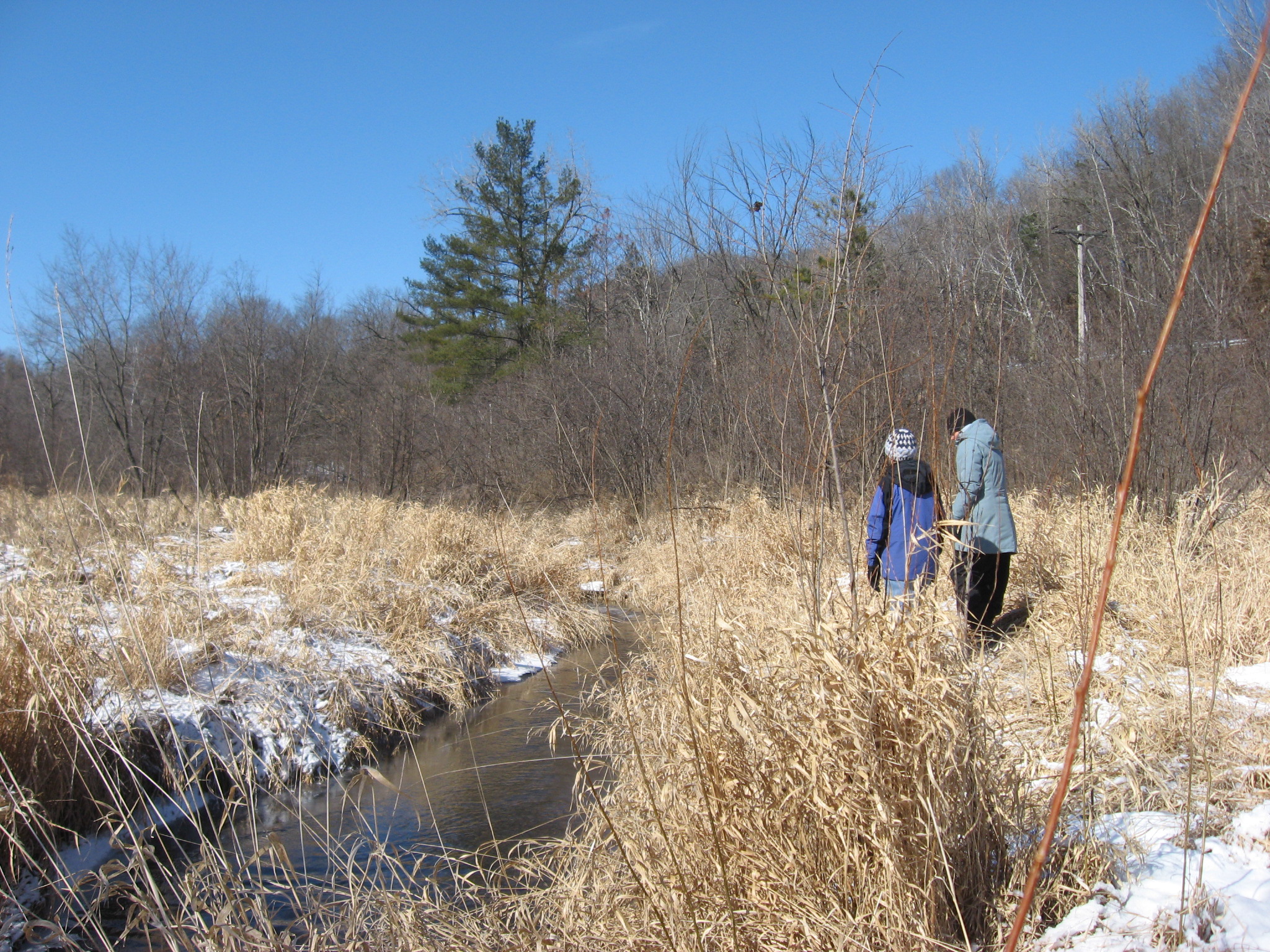
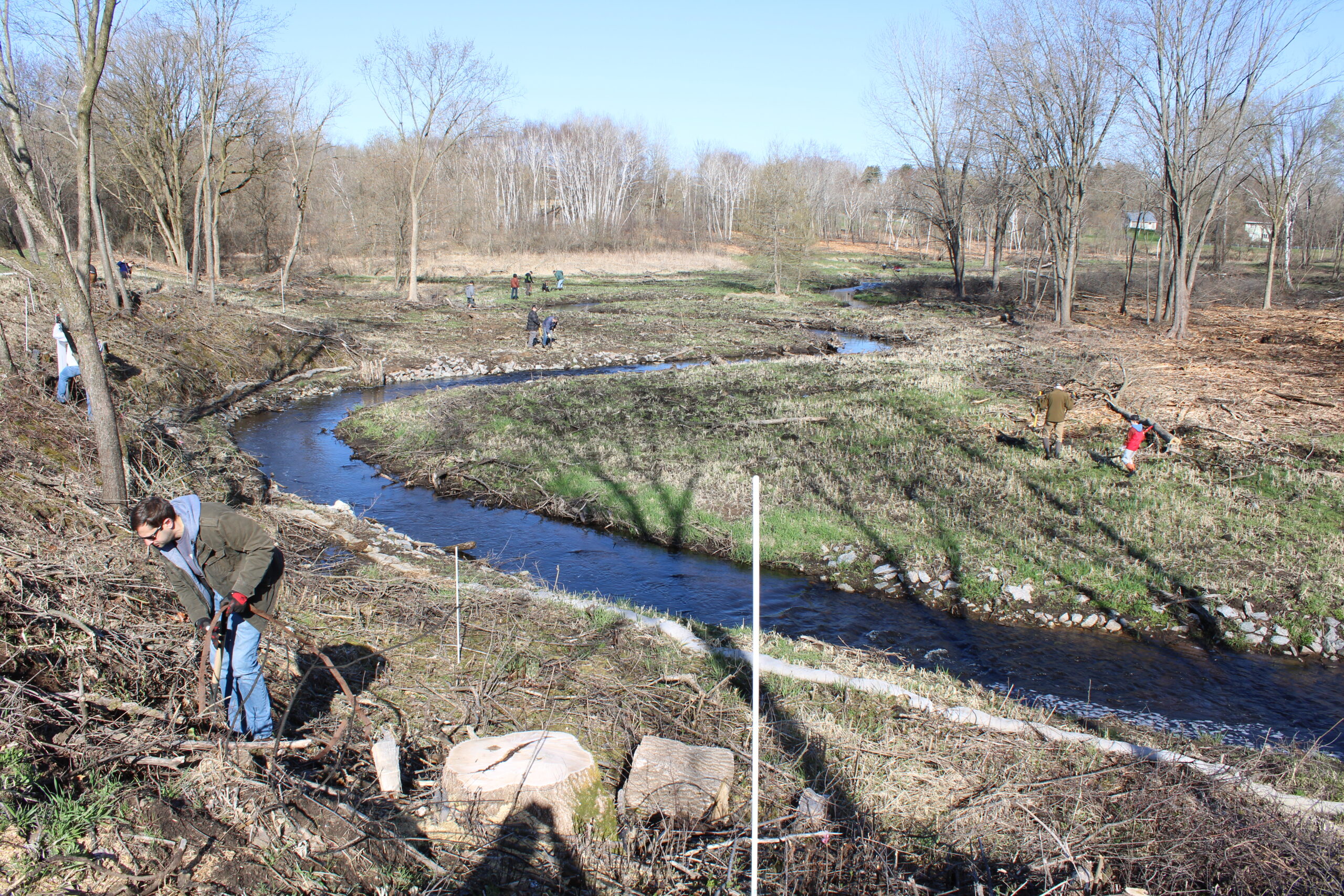
Prior to restoration, this stretch of Brown's Creek had eroding streambanks and sediment in the channel bottom, a disconnected floodplain, invasive species, and a lack of stream meanders, pool, and riffles.
Planning and Design
Concept Design and Project Order (September 2023)
The project was proposed to to restore the ecological and hydrologic functions of the creek and adjacent floodplain by reconnecting the creek with the floodplain, installing grade control riffles to limit channel incision, installing woody material and boulders for instream habitat, removing woody invasive species, and reestablishing native riparian vegetation. BCWD held a public hearing and ordered the final design for the project at the September 2023 regular board meeting.
Environmental Review (EAW) and Record of Decision (November 2023 - January 2024)
BCWD released an Environmental Assessment Worksheet (EAW) for the Brown’s Creek Restoration Project for review on November 8, 2023, held a public hearing on December 13, 2023, and accepted written comments until December 21, 2023. BCWD adopted a record of decision for the environmental review for the Brown's Creek Restoration Project and made a negative declaration on the need for an environmental impact statement on January 10, 2024.
- Brown's Creek Restoration EAW [PDF]
- BCWD Resolution 24-01: Environmental Review Record of Decision [PDF]
Permits and Agreements
The following permits and agreements were acquired prior to beginning construction:
- MN Department of Natural Resources: Public Waters Permit [PDF] and Cooperative Agreement [PDF]
- City of Stillwater: Cooperative Agreement [PDF] and Floodplain Certificate of No-Rise [PDF]
- Private Landowners: Van Tassel Agreement [PDF]
- U.S. Army Corps of Engineers: General Permit [PDF]
- U.S. Fish and Wildlife Service: Authorization for Tree Cutting (Northern Long-Eared Bats) [PDF]
- Brown's Creek Watershed District: Compliance with BCWD rules [PDF]
- Minnesota Pollution Control Agency: NPDES Permit [PDF]
Project Bidding and Contracting (February - April 2024)
Project bids were requested from February - March 2024 and a contractor selected by April 2024. The contractor selected for this project was Geomorphic Restoration.
Construction
The construction timing took into account the limitations of working in a trout stream and avoiding impacts to the Northern long-eared bat.
Site Preparation (June 2024)
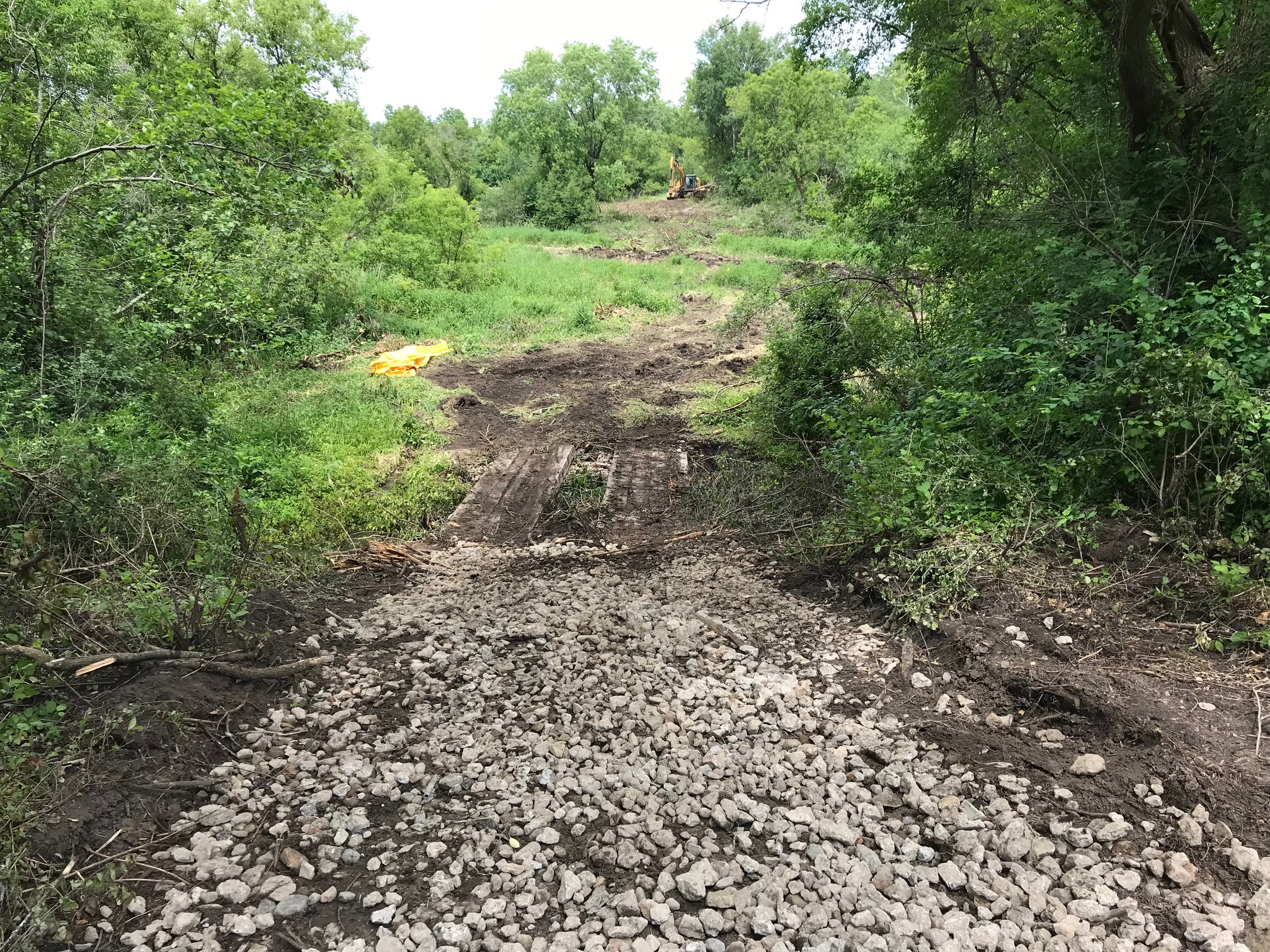
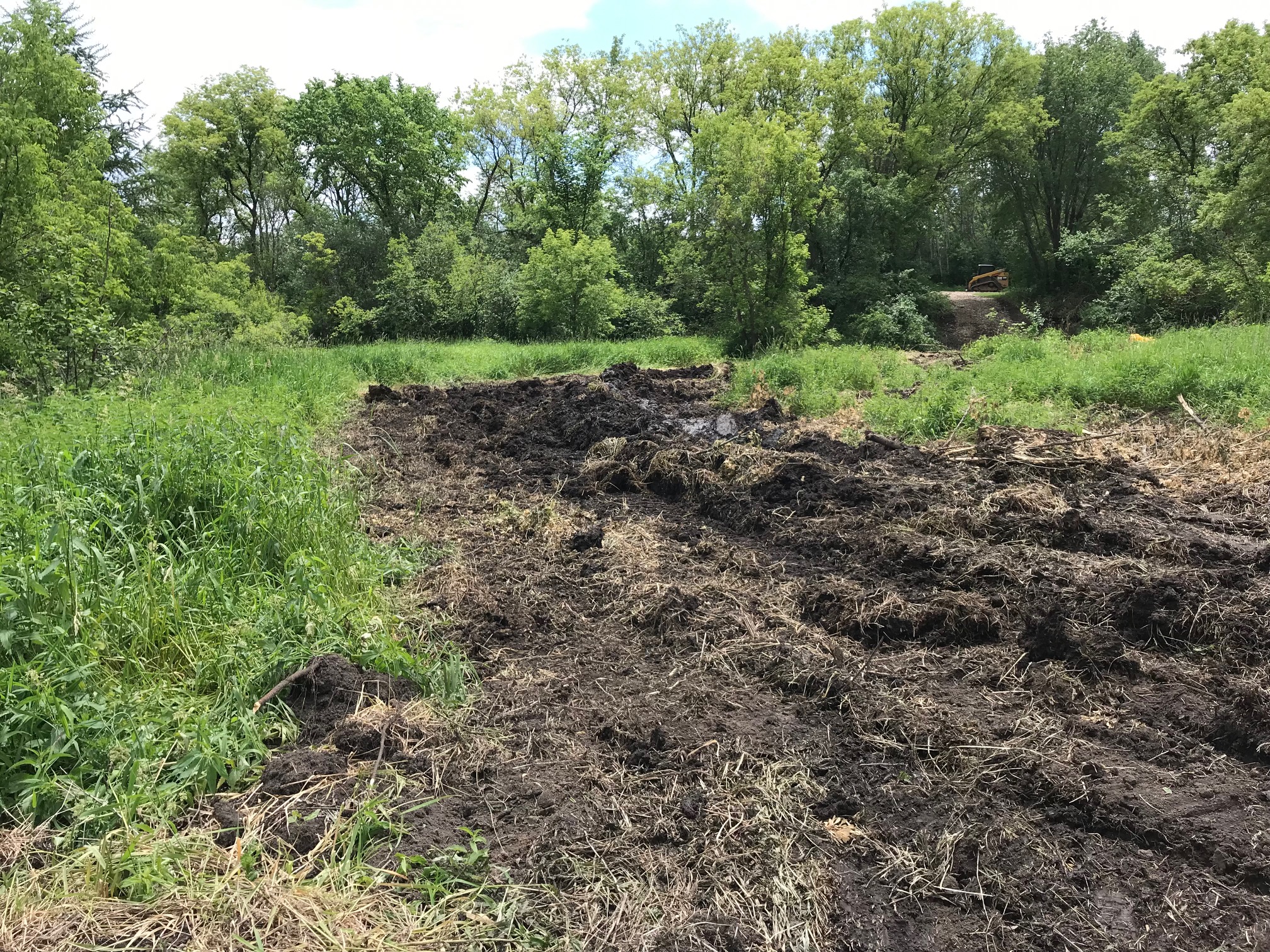
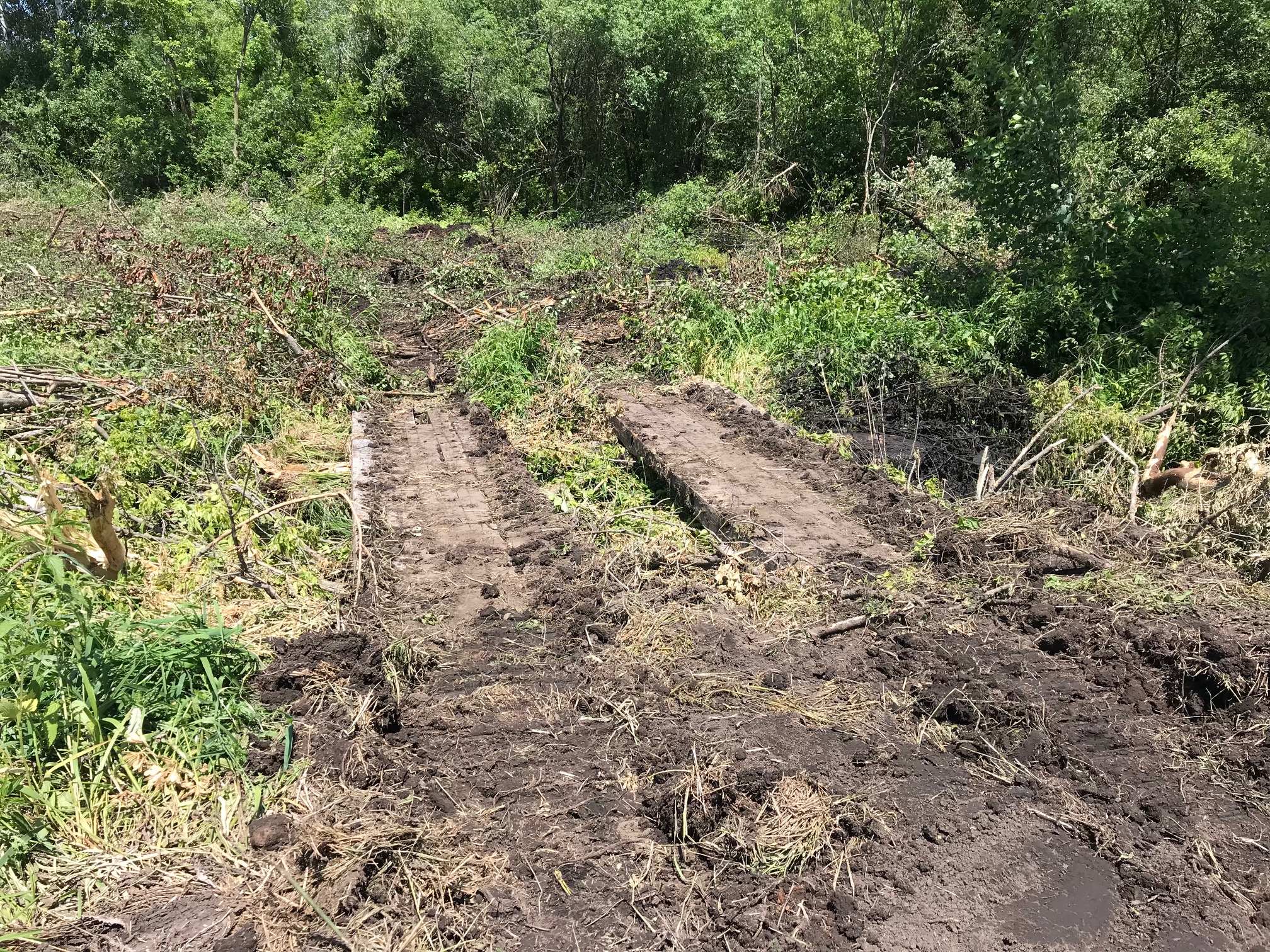
Site preparation was delayed from mid-May due to rain. In early June, contractors completed the following activities: mobilization, construction staking, confirming site utilities, delivering equipment, clearing and grubbing, and creating access paths.
In-stream Construction and Restoration (July - August 2024)
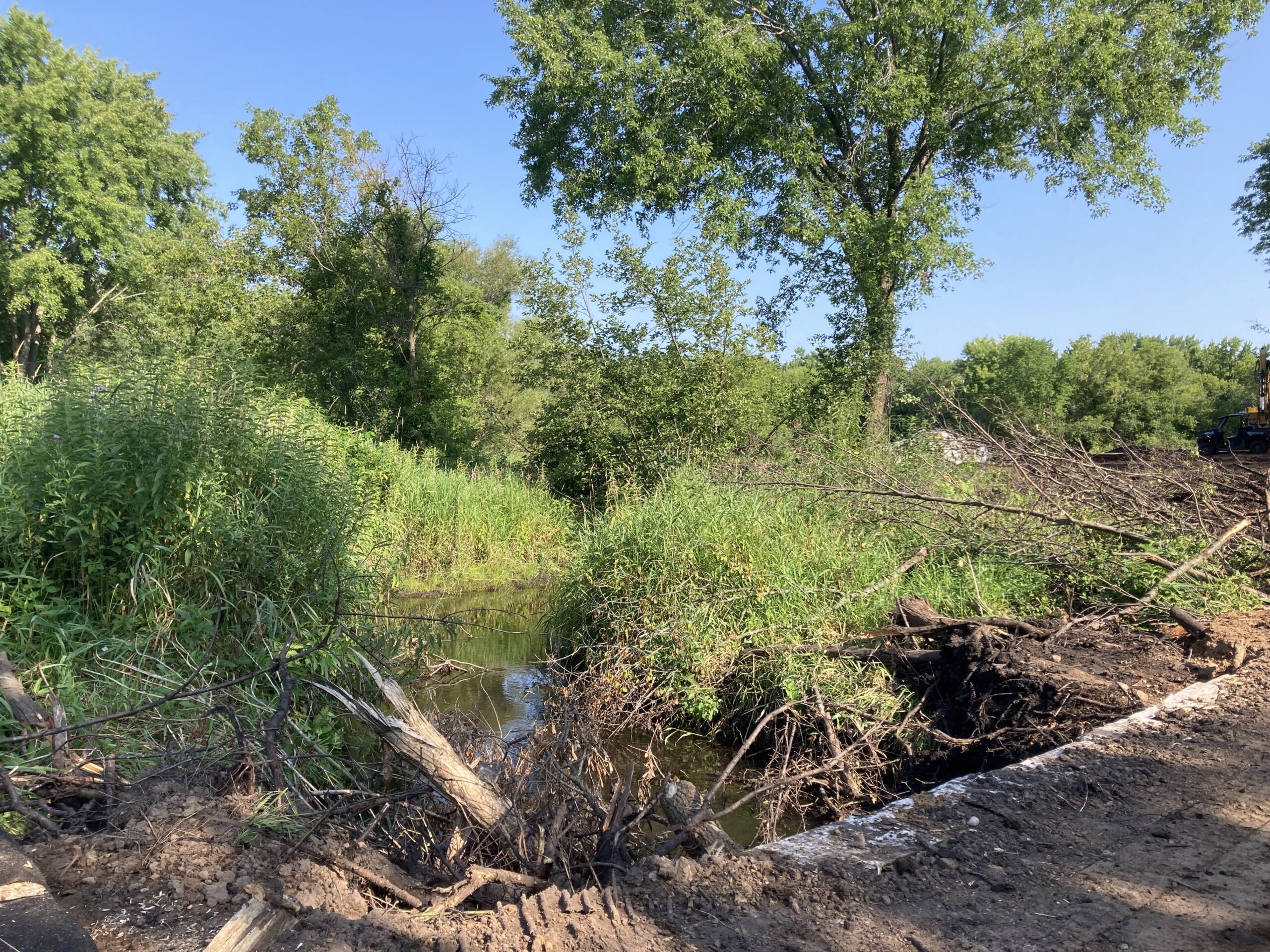
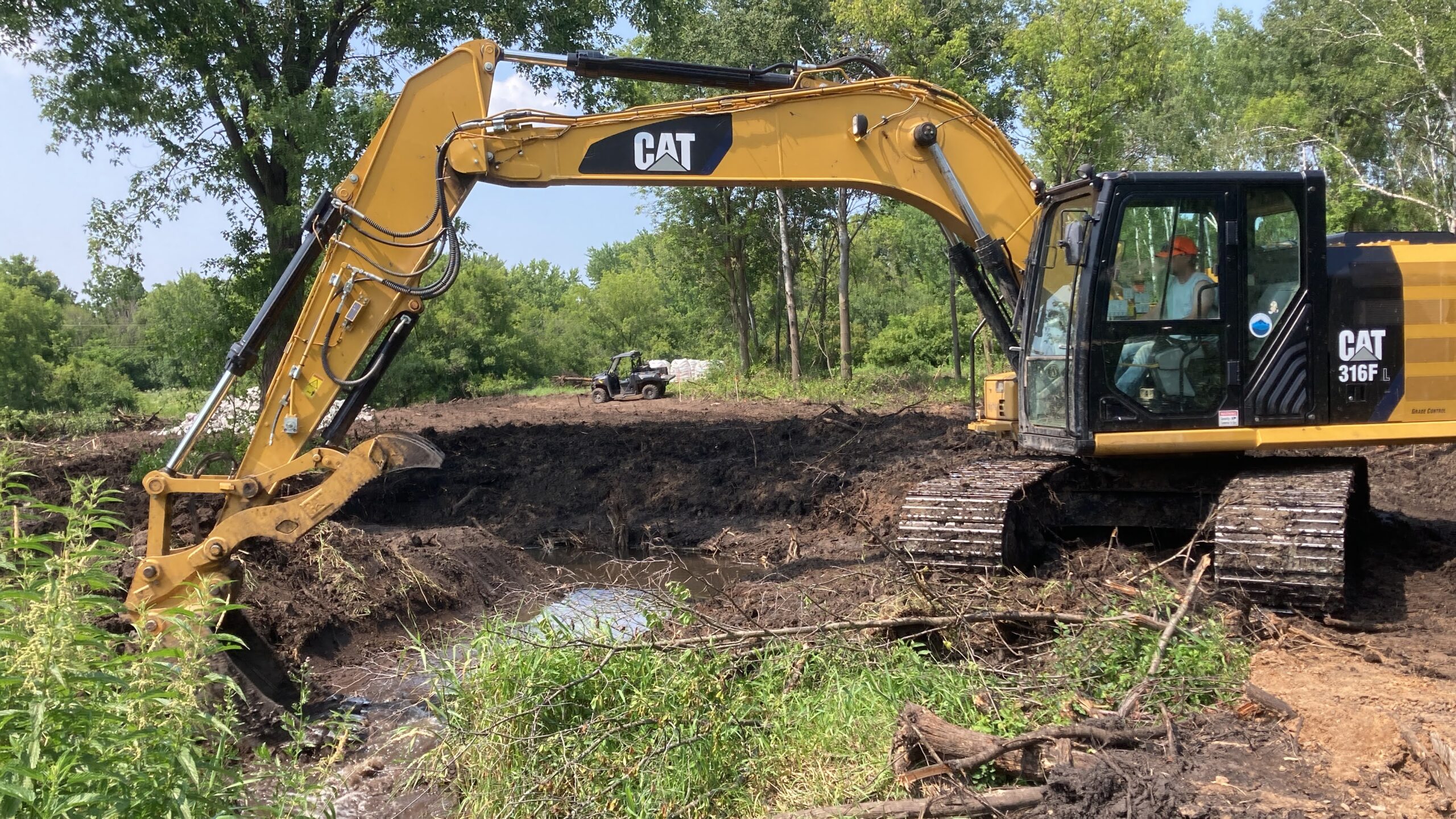
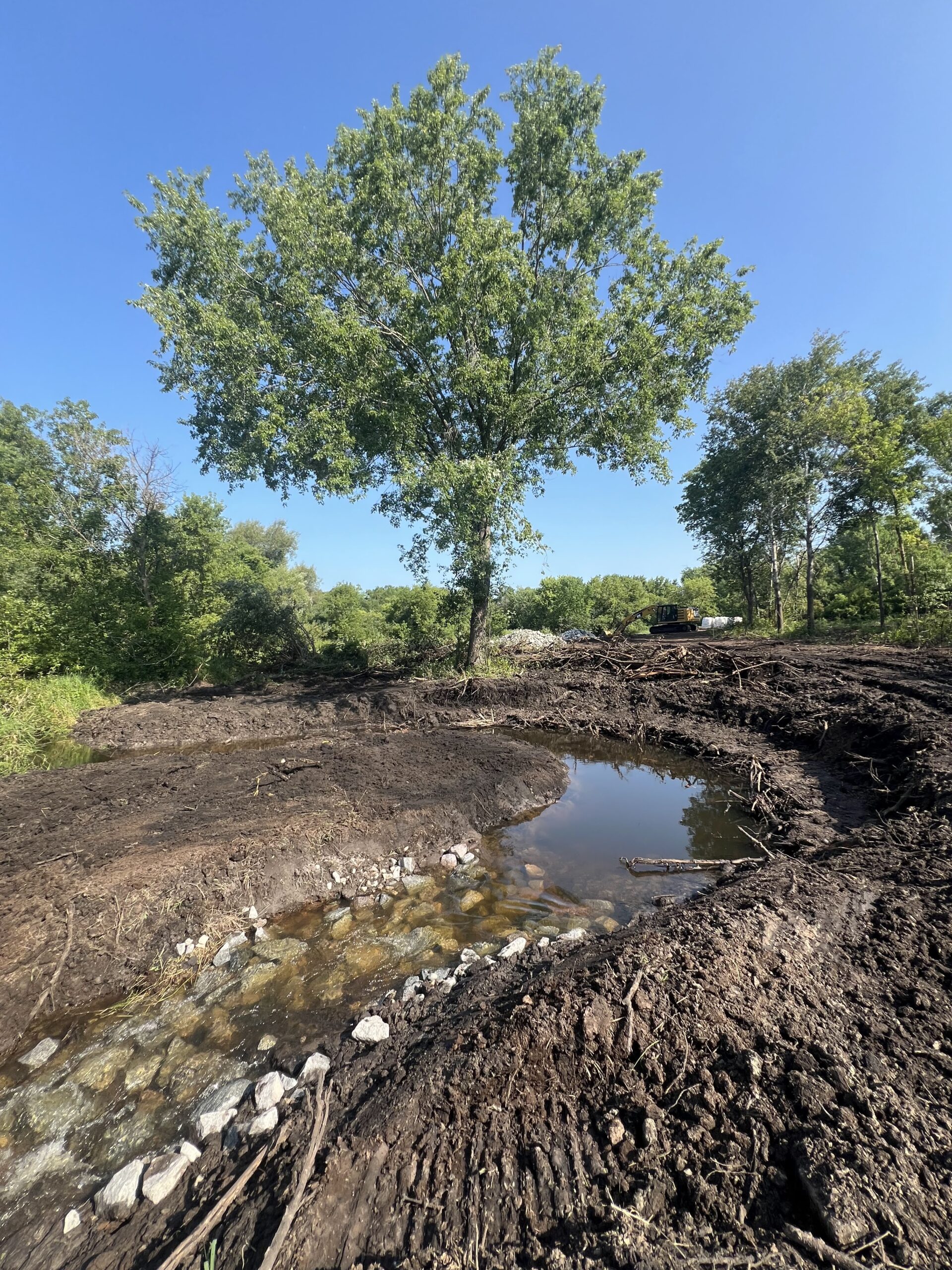
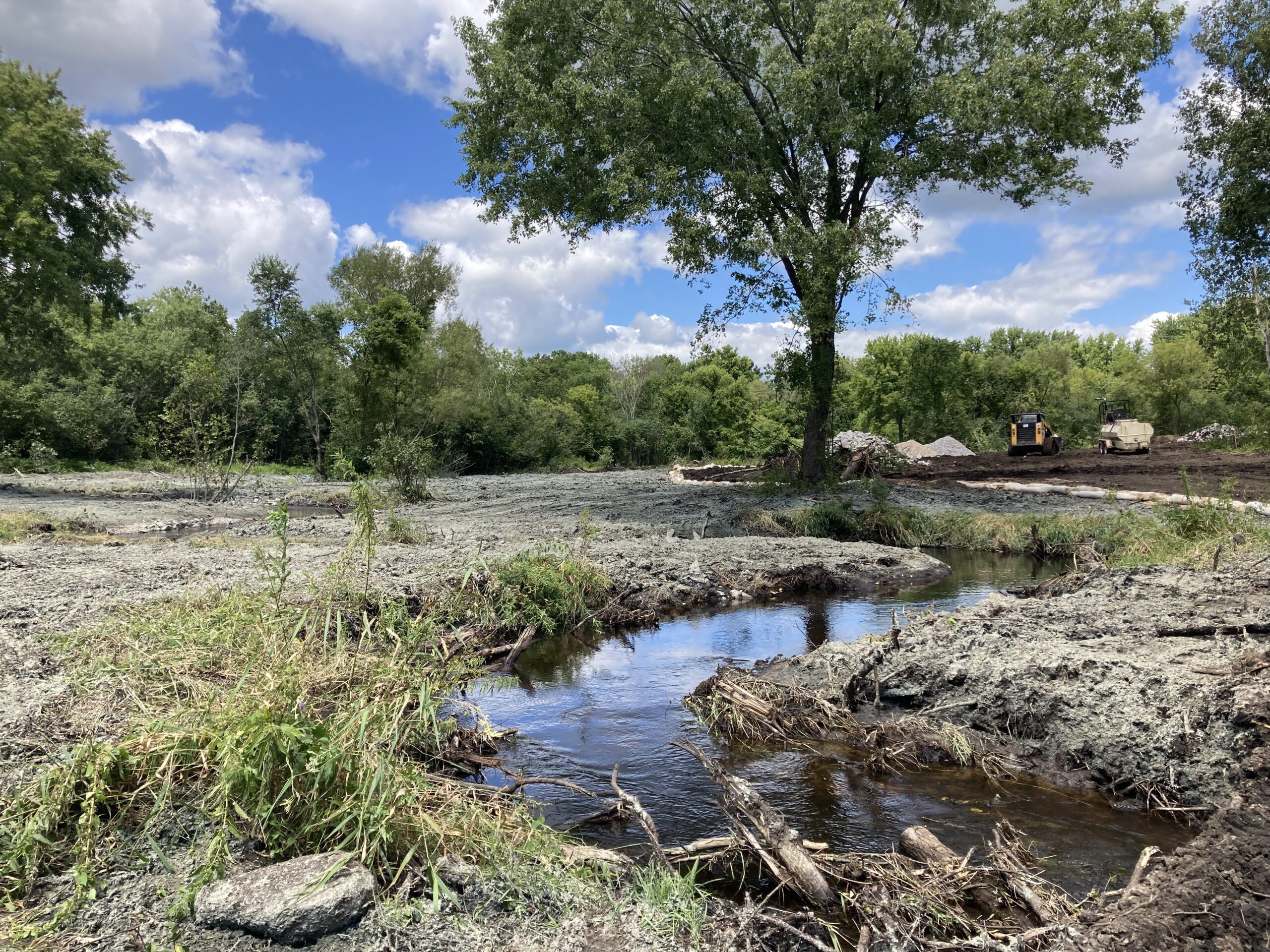
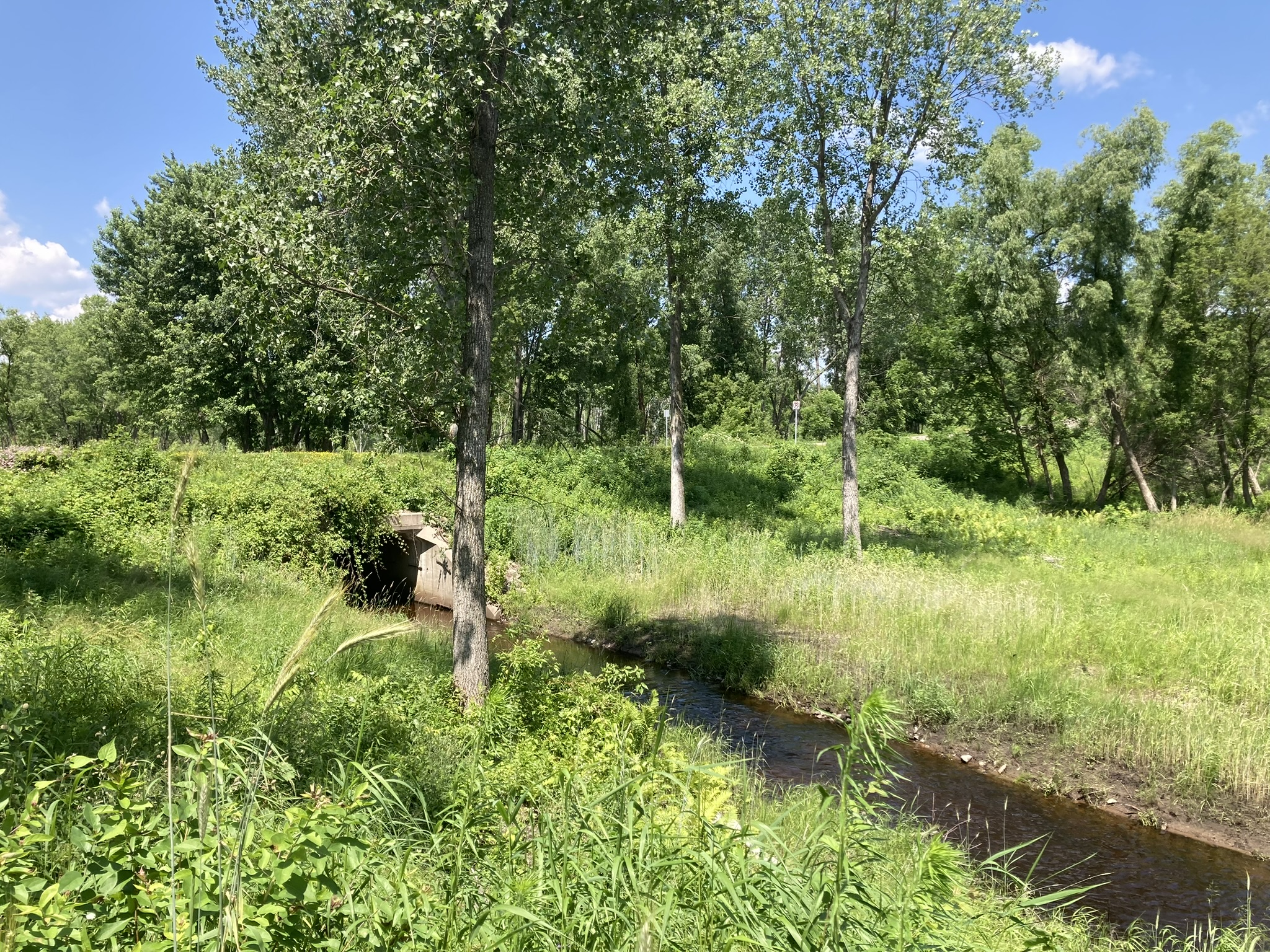
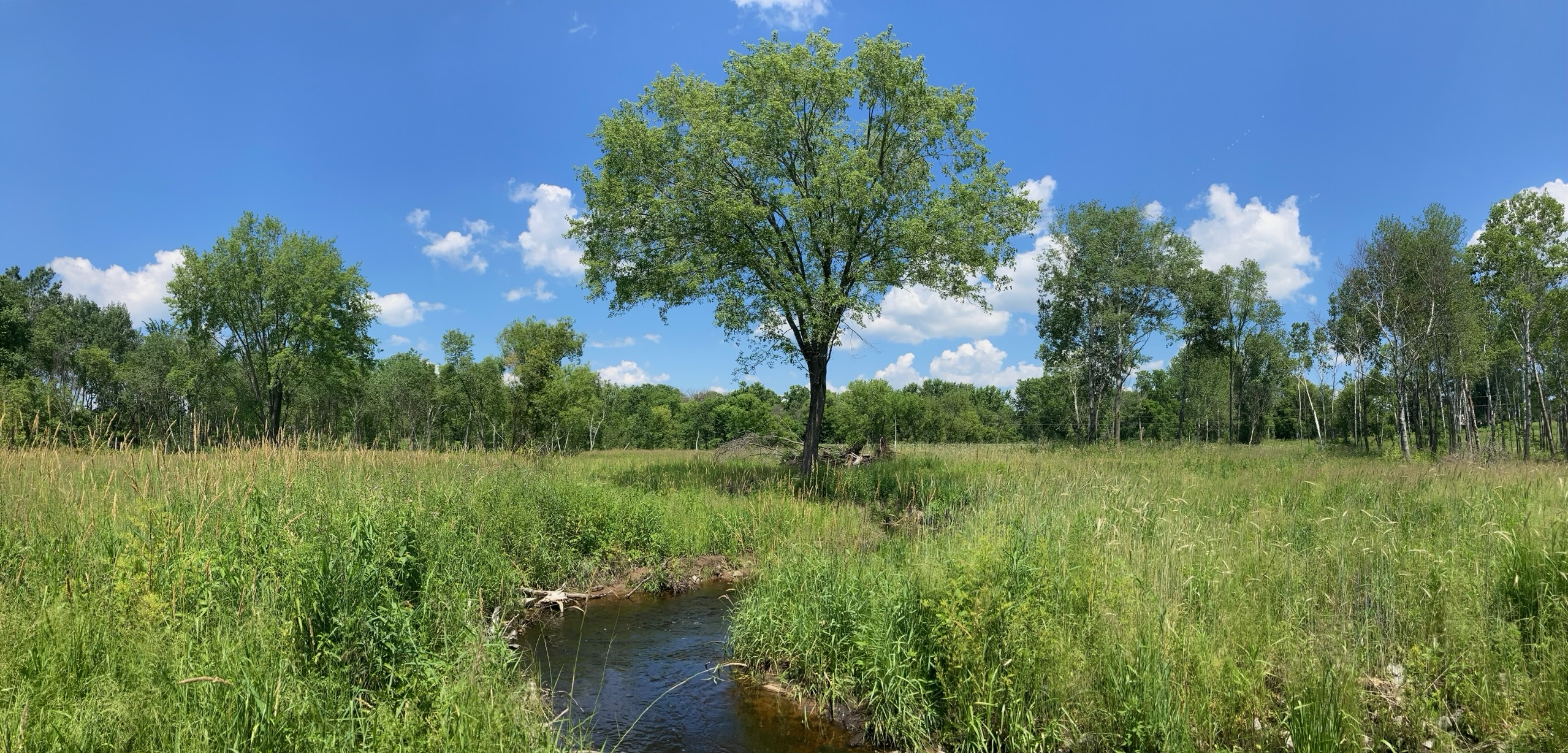
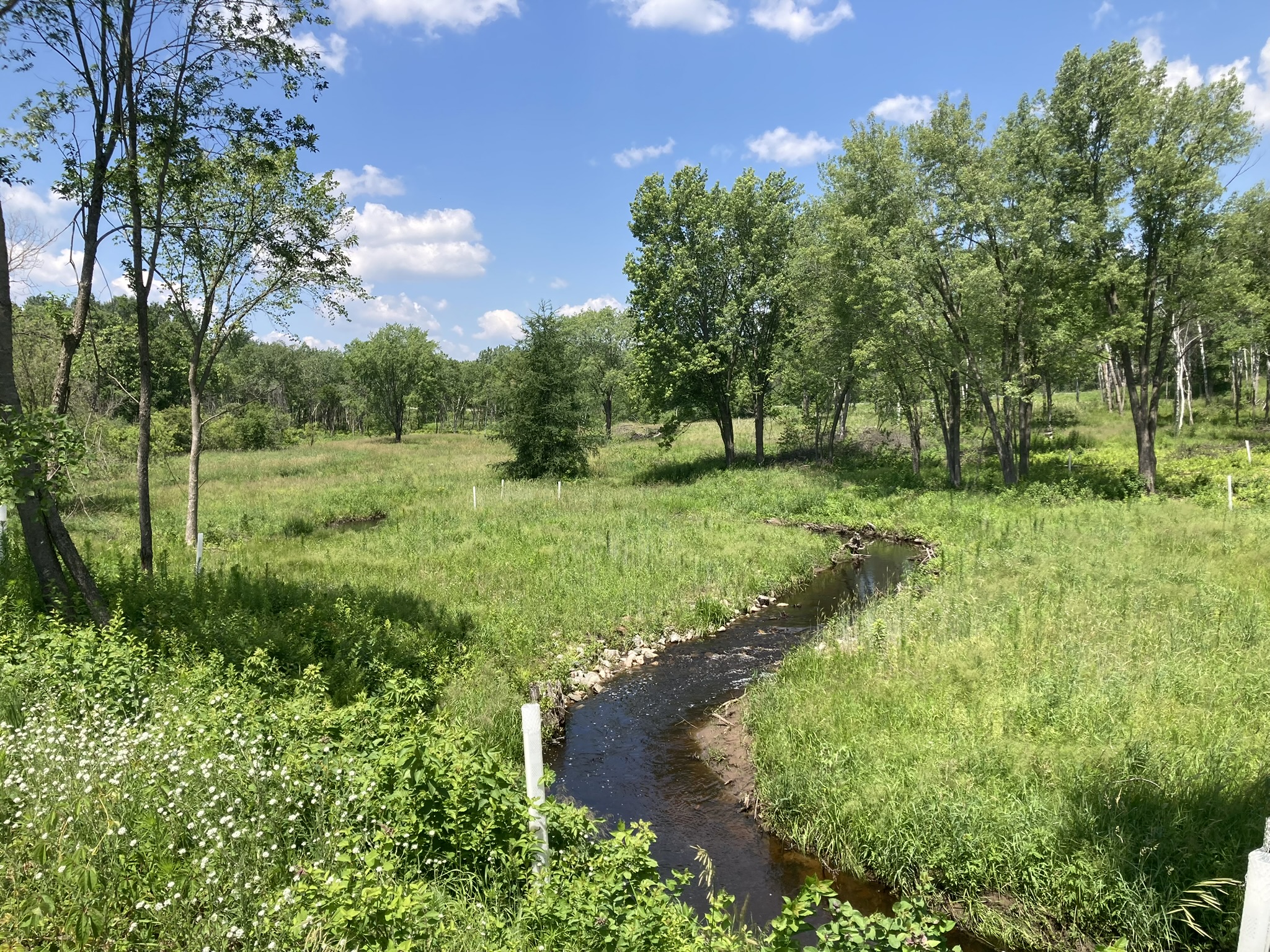
Construction began in July. On July 11th, construction began on upstream portion between McKusick Road and Neal Ave in Brown's Creek Park. On July 12th, the riffle and pool began taking shape in the new meander. On August 9th, the area was stabilized with seed and hydromulch. The new meander was stabilized with the trees and root wads and transplanted grasses from project area. Only weeks after the construction, the site was already turning green with plant life again, and the temporary access bridge was removed.
Site Restoration (September 2024)
By September 2024, construction activities were complete aside from the ADA access. A final walkthrough was completed, and the site was demobilized.
Vegetative Establishment and Maintenance (October 2024 - January 2025)
In October 2024, the site was watered (we were in a drought) and monitored for vegetation establishment. In November 2024, complete buckthorn removal was done. In January 2025, an additional 5-acres of buckthorn removal was completed east of the project area and added to the project.
Native Tree and Shrub Planting (April 2025)
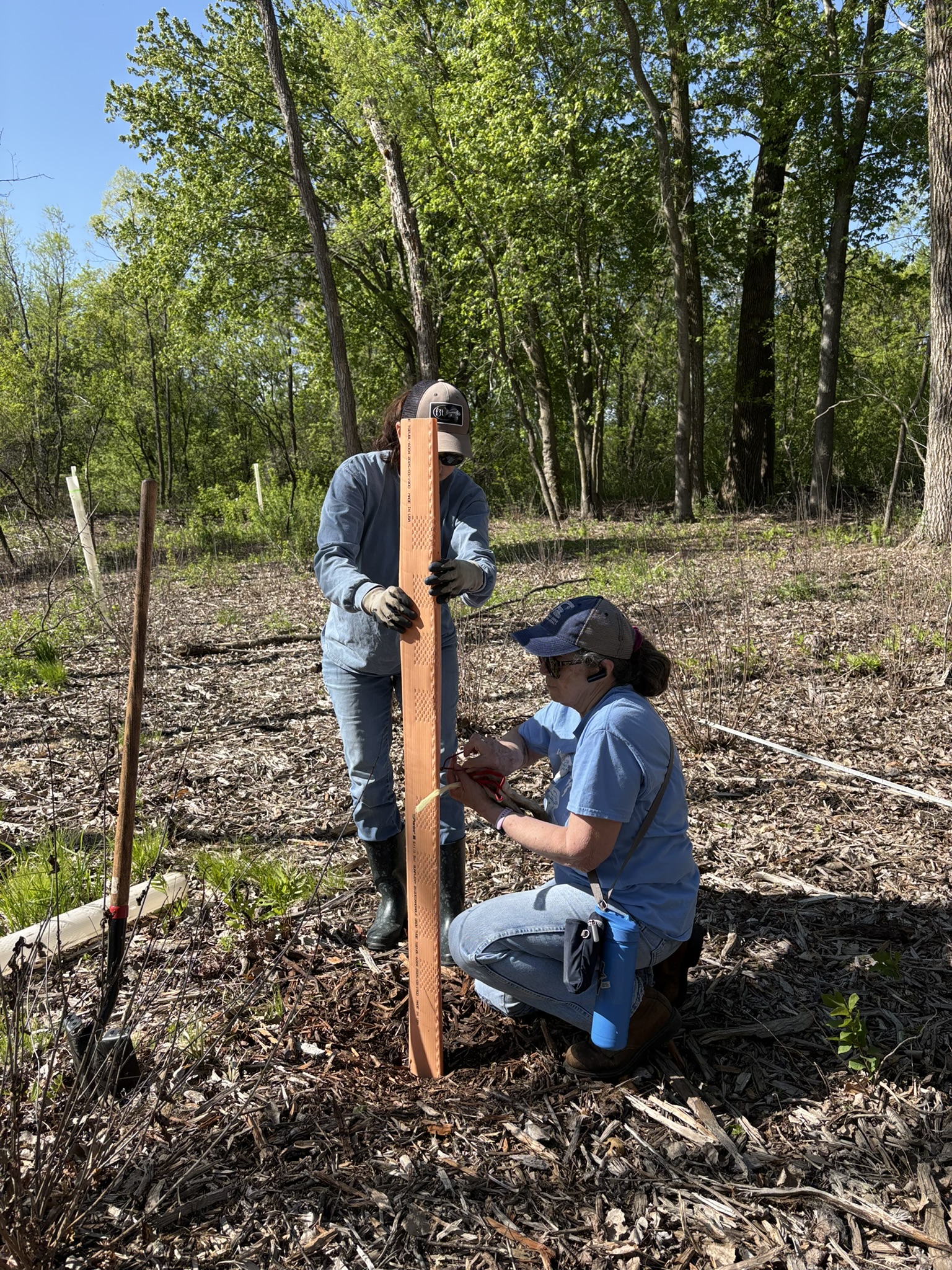
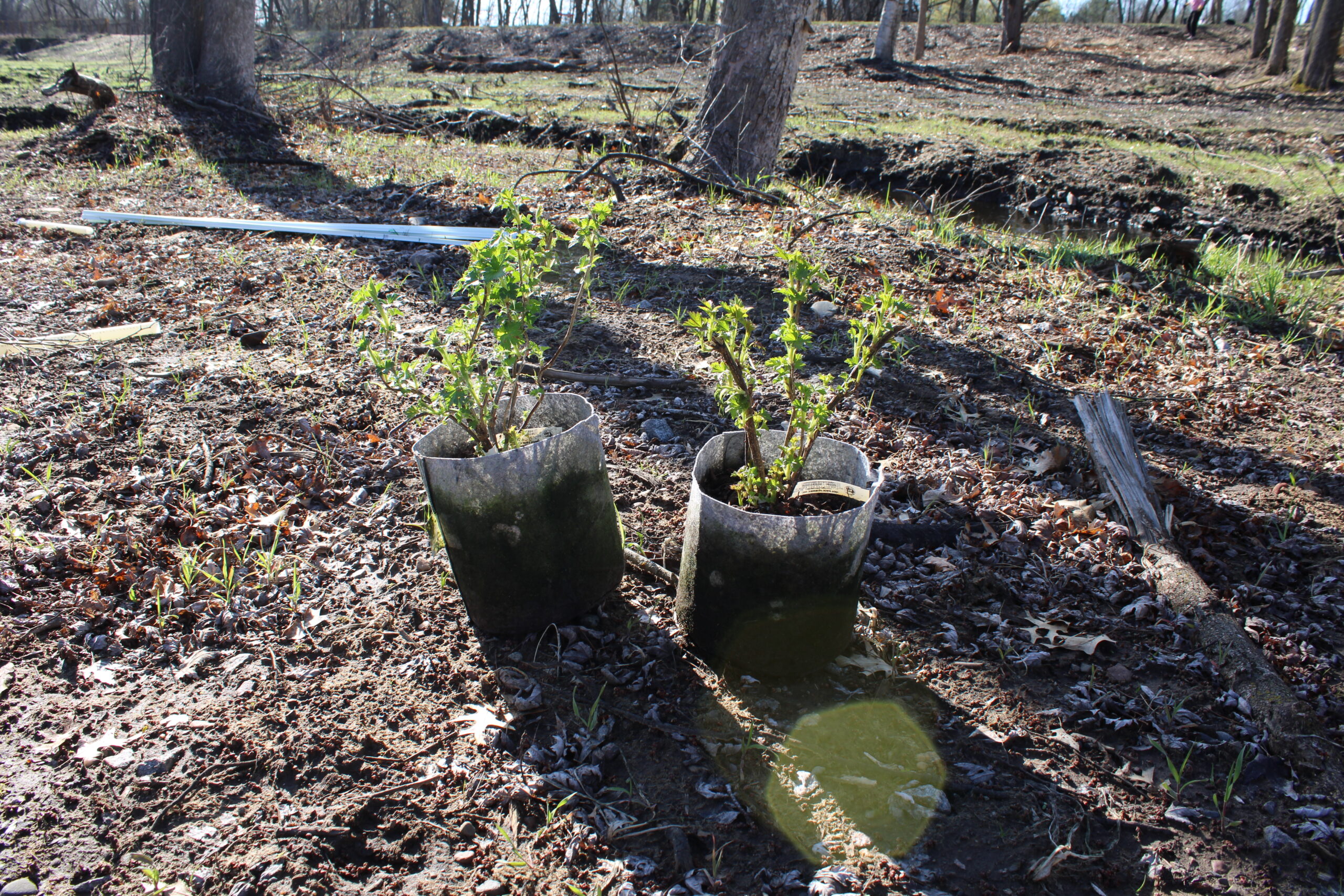
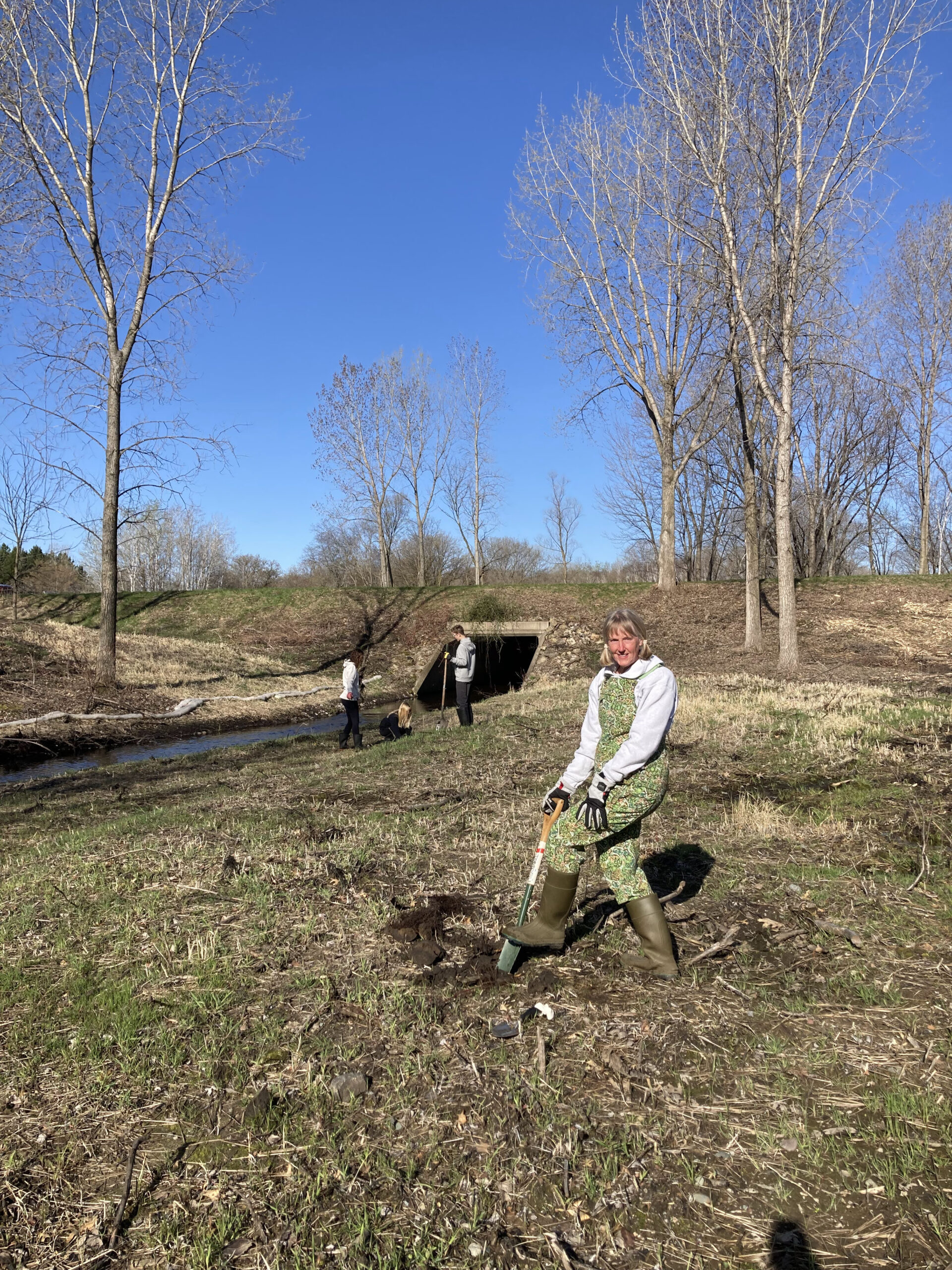
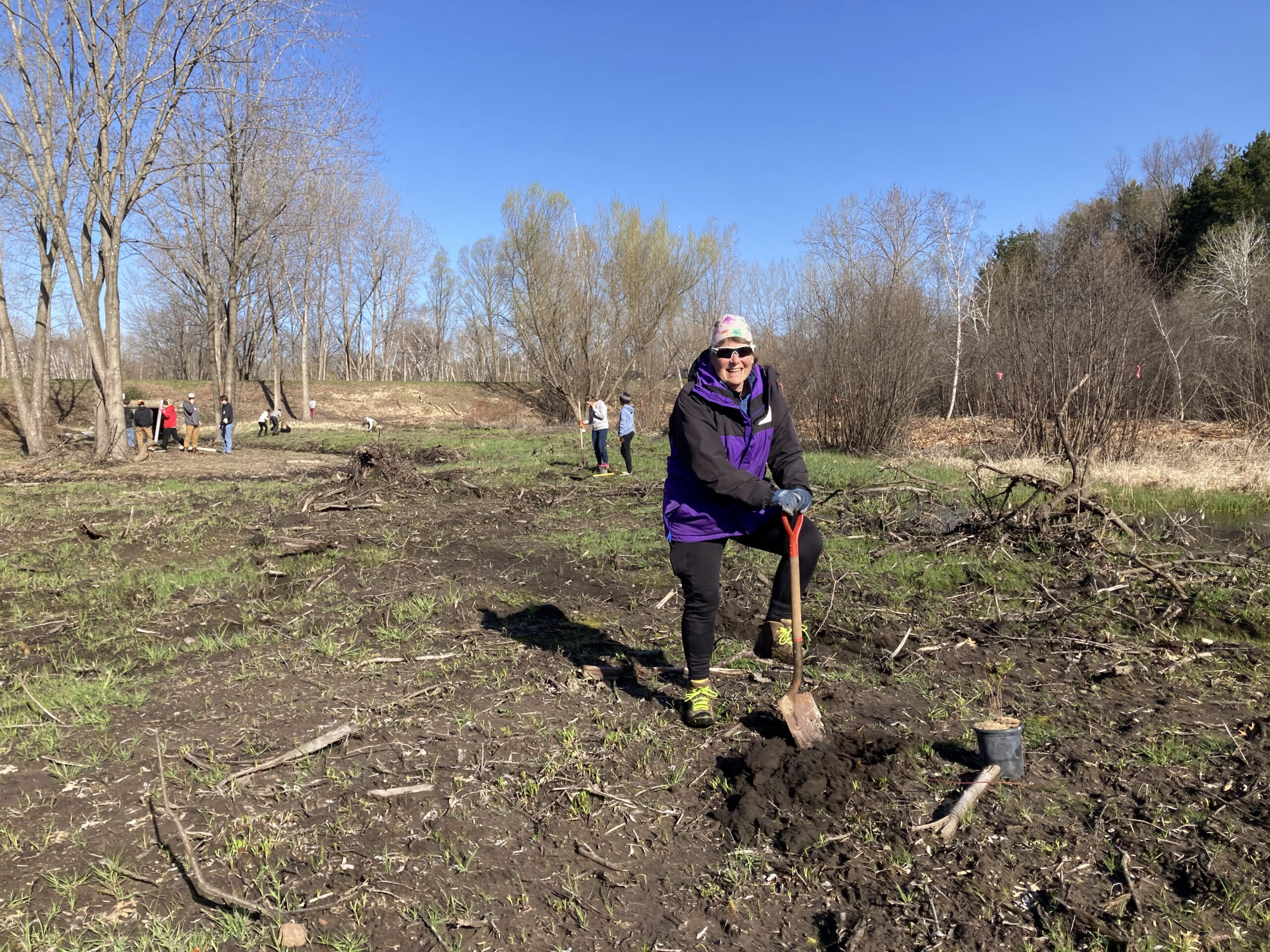
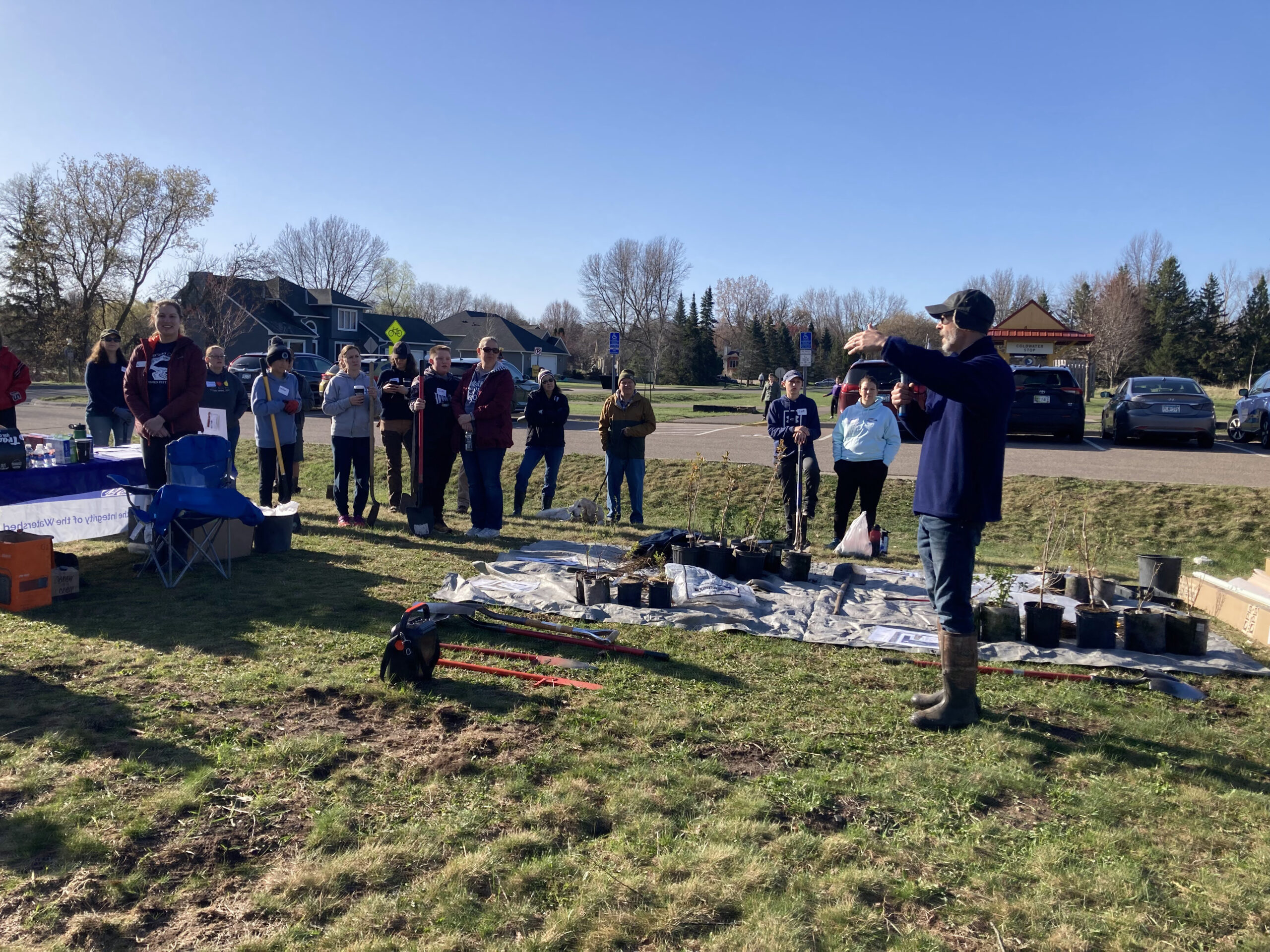
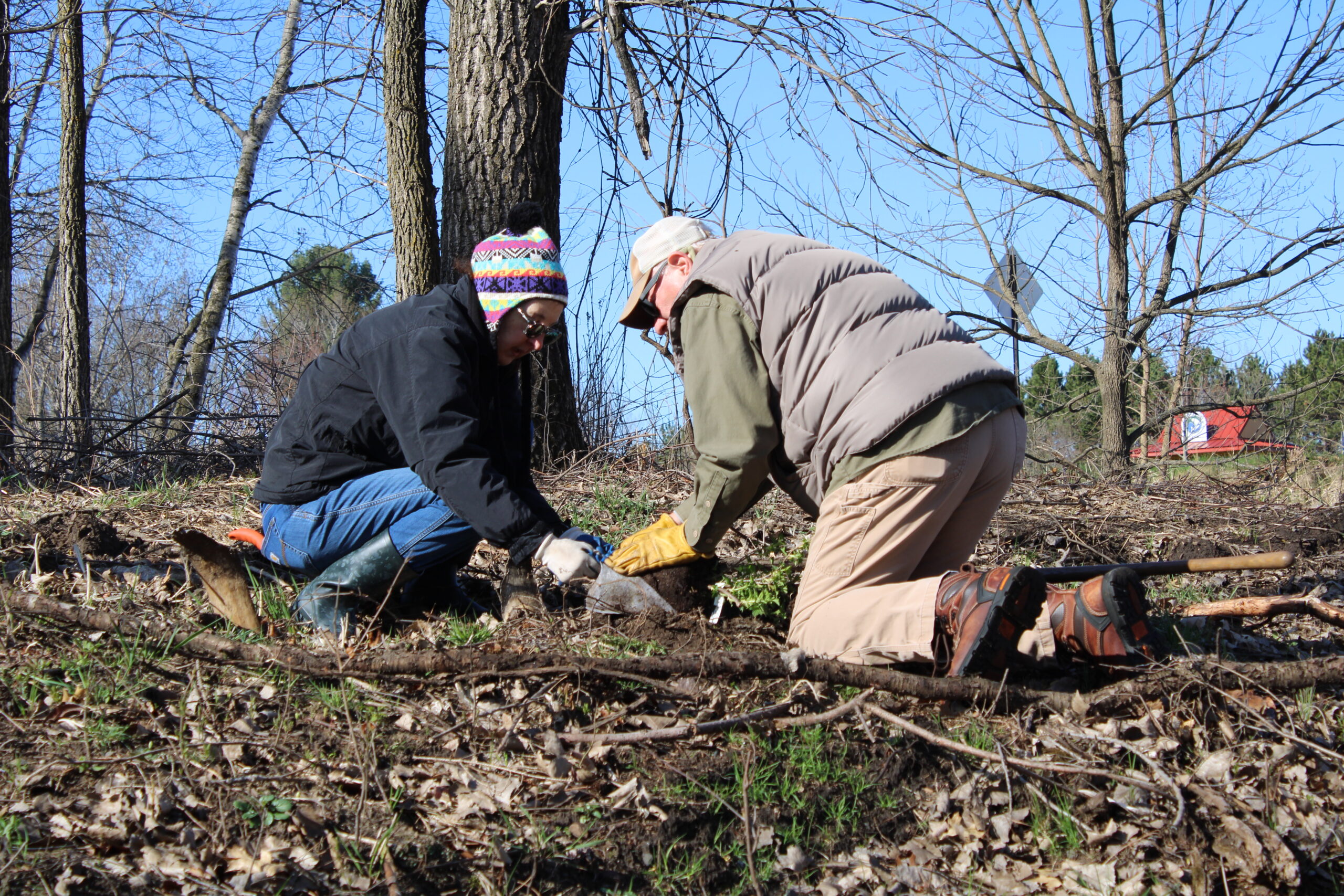
On April 26, 2025, over 60 volunteers helped plant over 200 native trees and shrubs to supplement native seed mixes over the restoration area! The trees are being protected by special tree tubes that allow filtered light into the tubes and protect the trees from being eaten by wildlife. These tubes will stay on for approximately three years (about the time the small trees will grow to the top of the tree tube).
Trees – 12-18” Bare root seedlings (donated by City of Stillwater)
- Hackberry (Celtis occidentalis) - 25
- Basswood (Tilia Americana) - 50
- Bur oak (Quercus macrocarpa) - 25
- Tamarack (Larix laricina) - 25
- Swamp White Oak (Quercus bicolor) - 25
Shrubs – 12-18” Bare root seedlings
- Common Chokecherry (Prunus virginiana) - 25
- Cranberrybush (Viburnum trilobum) - 25
- Red-osier Dogwood (Cornus sericea) - 25
Shrubs – 1-2 Gallon containers
- American Black Currant (Ribes americanum) #2 Cont. - 5
- Nannyberry Viburnum (Viburnum lentago) #2 Cont. - 5
- American Hazelnut (Corylus americana) #2 Cont. - 5
- Meadowsweet (Spiraea alba) #1 Cont. - 5
- Pussy Willow (Salix discolor) #1 Cont. - 5
Post-Restoration Establishment (April - July 2025)
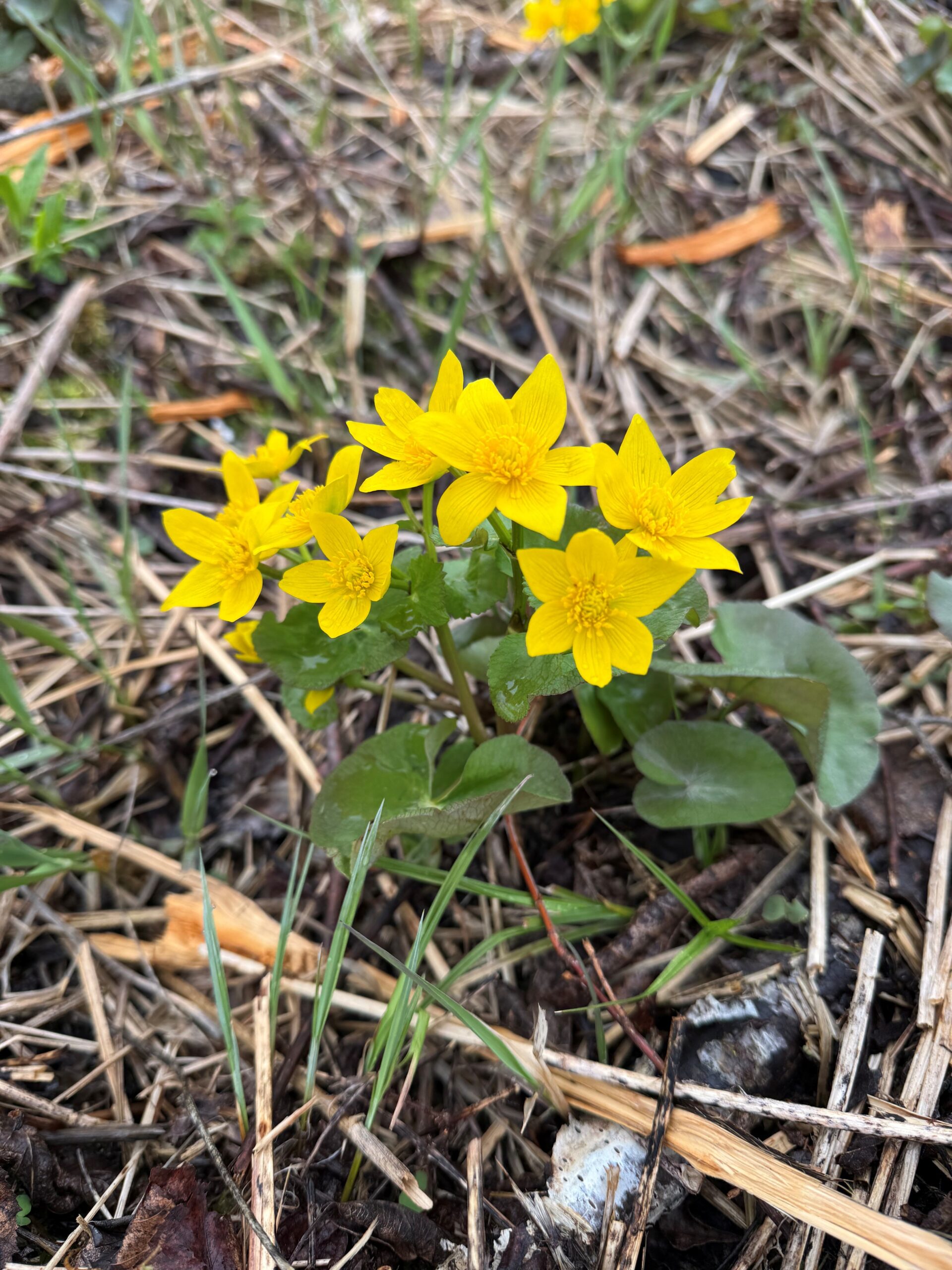
Around the time of the tree planting, lush native vegetation started to grow in. This included the Marsh Marigold, a native plant that was being suppressed by the dense buckthorn. With access to sunlight, they began blooming throughout the project area. By summer, the project area was full of greenery.


Stream Access Construction (June - September 2025)
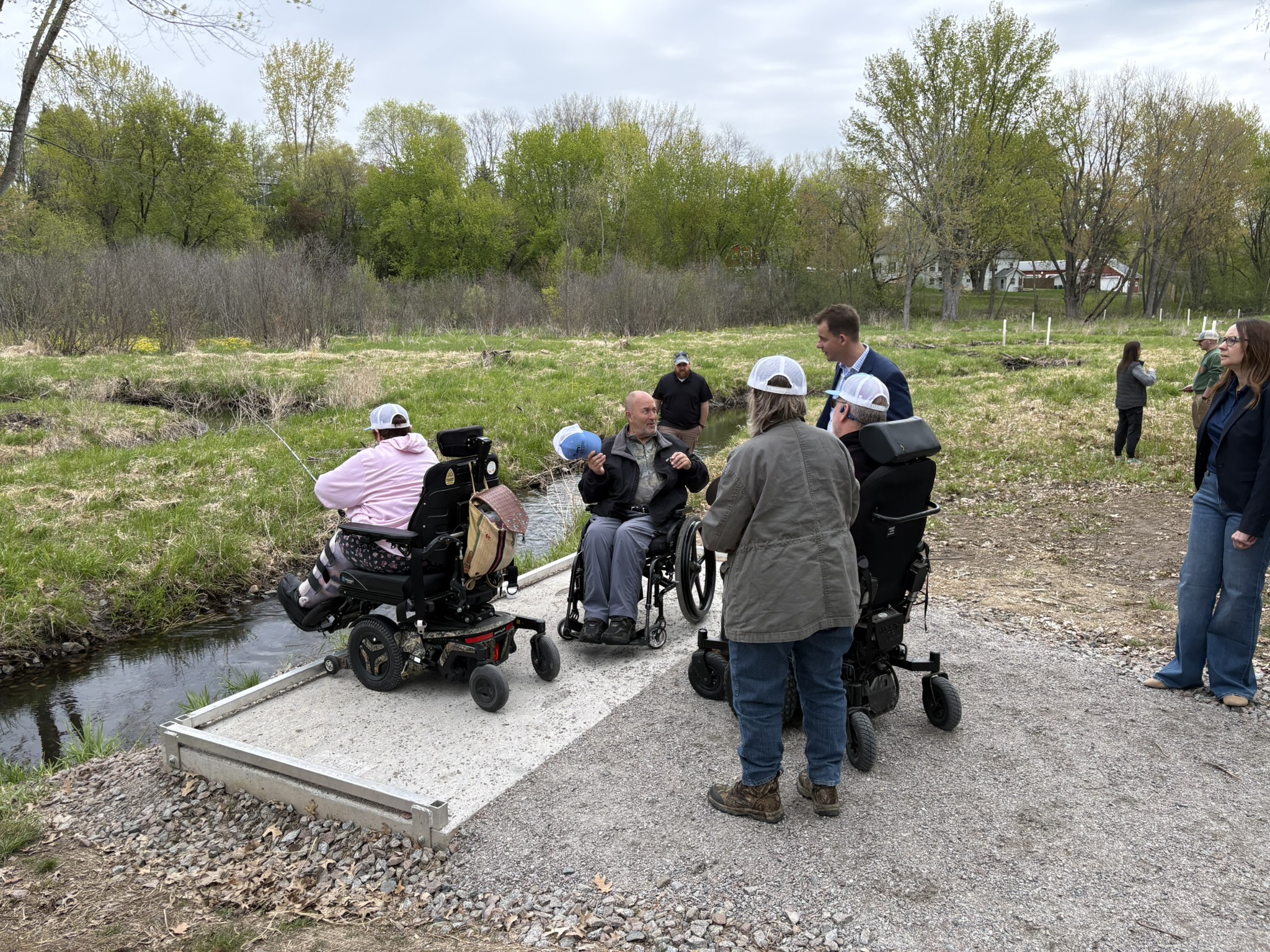
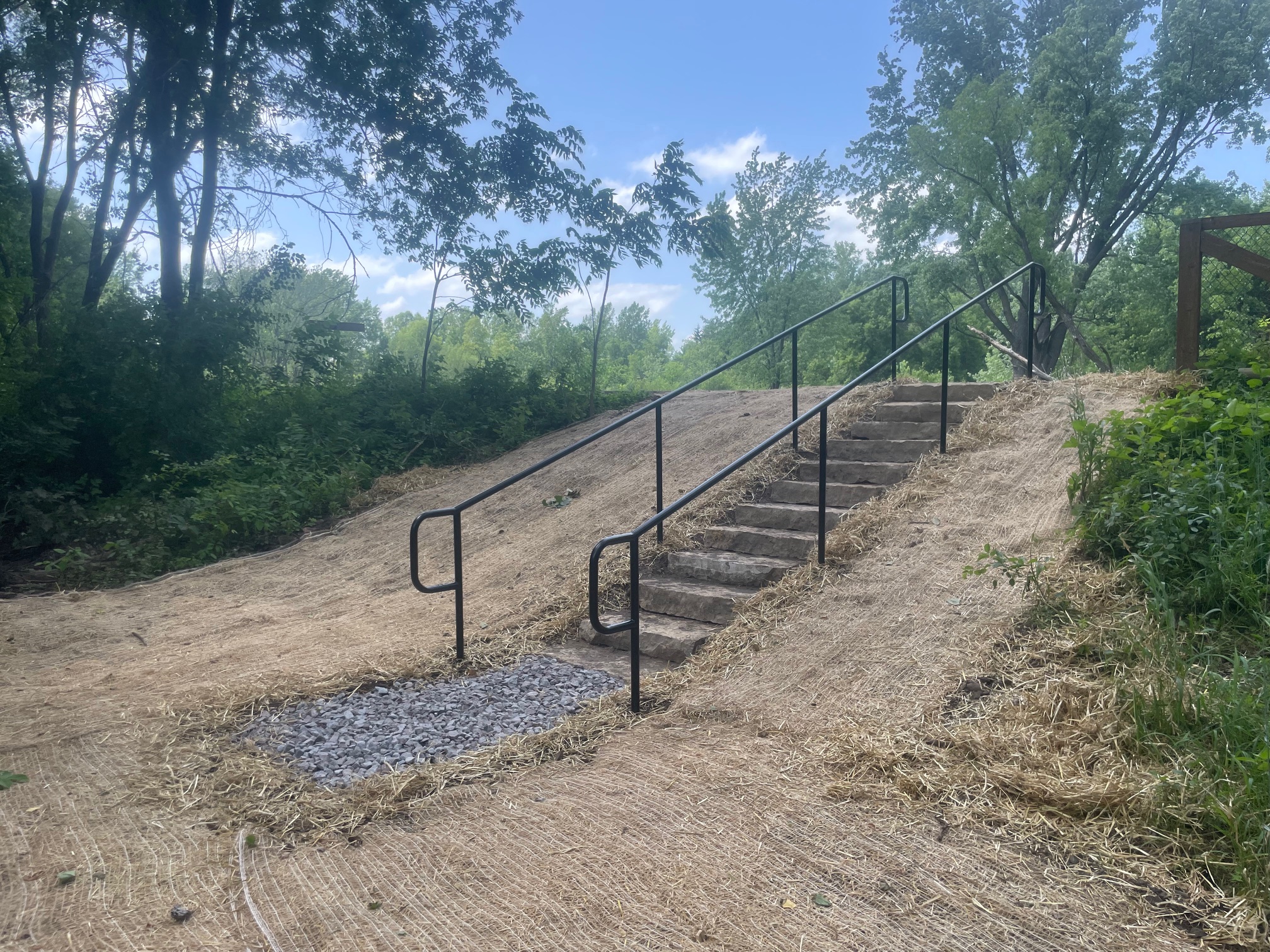
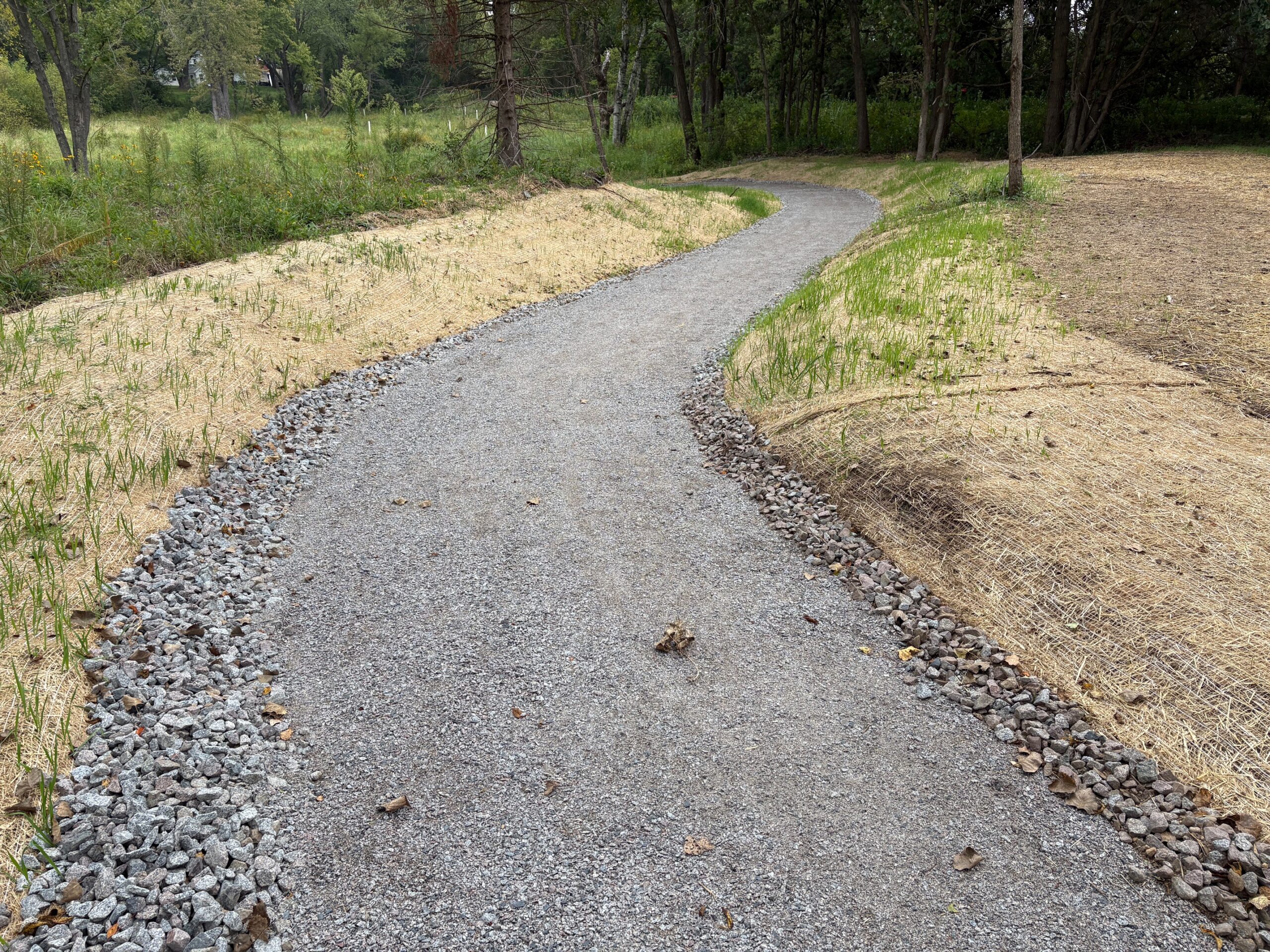
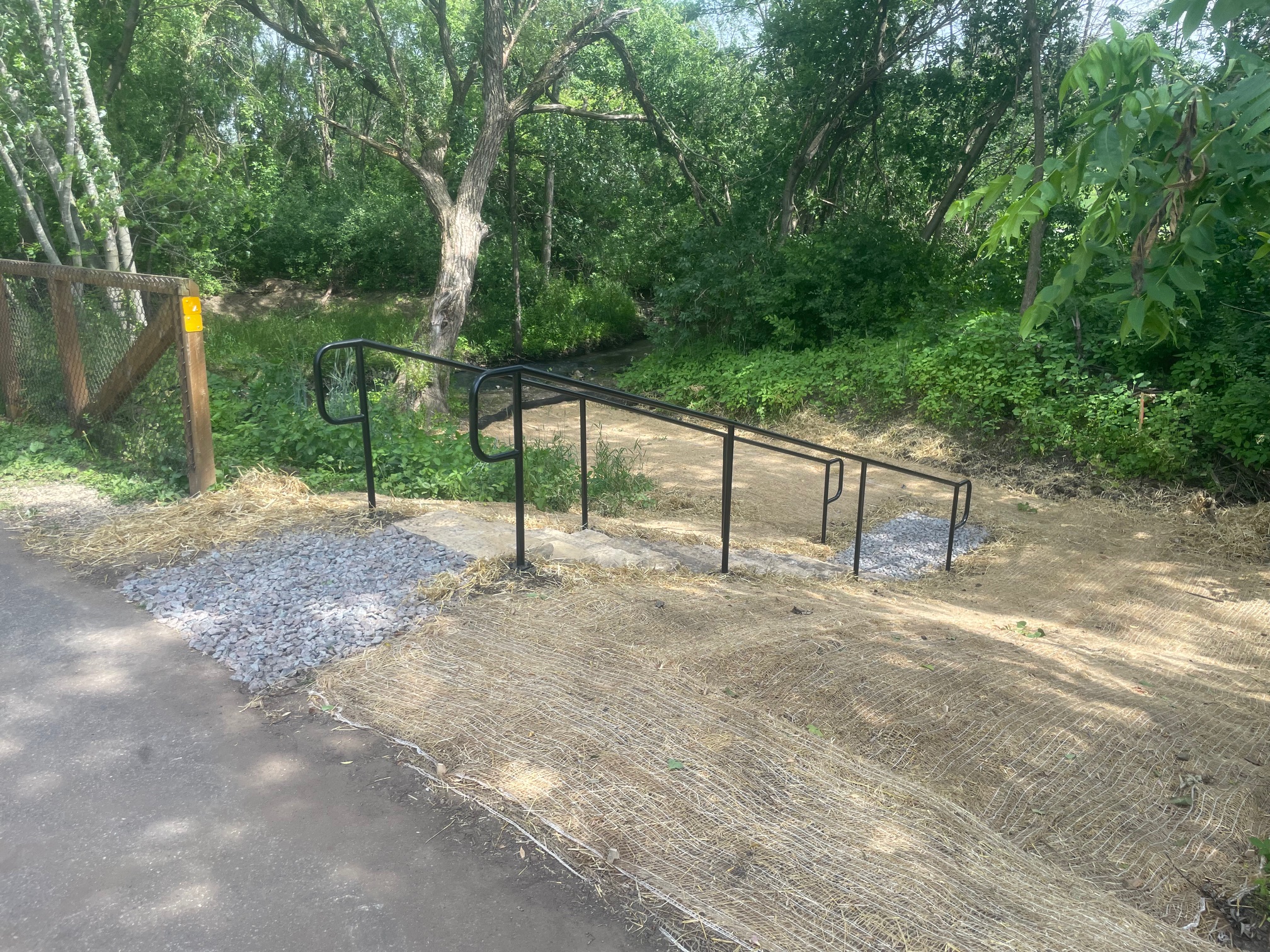
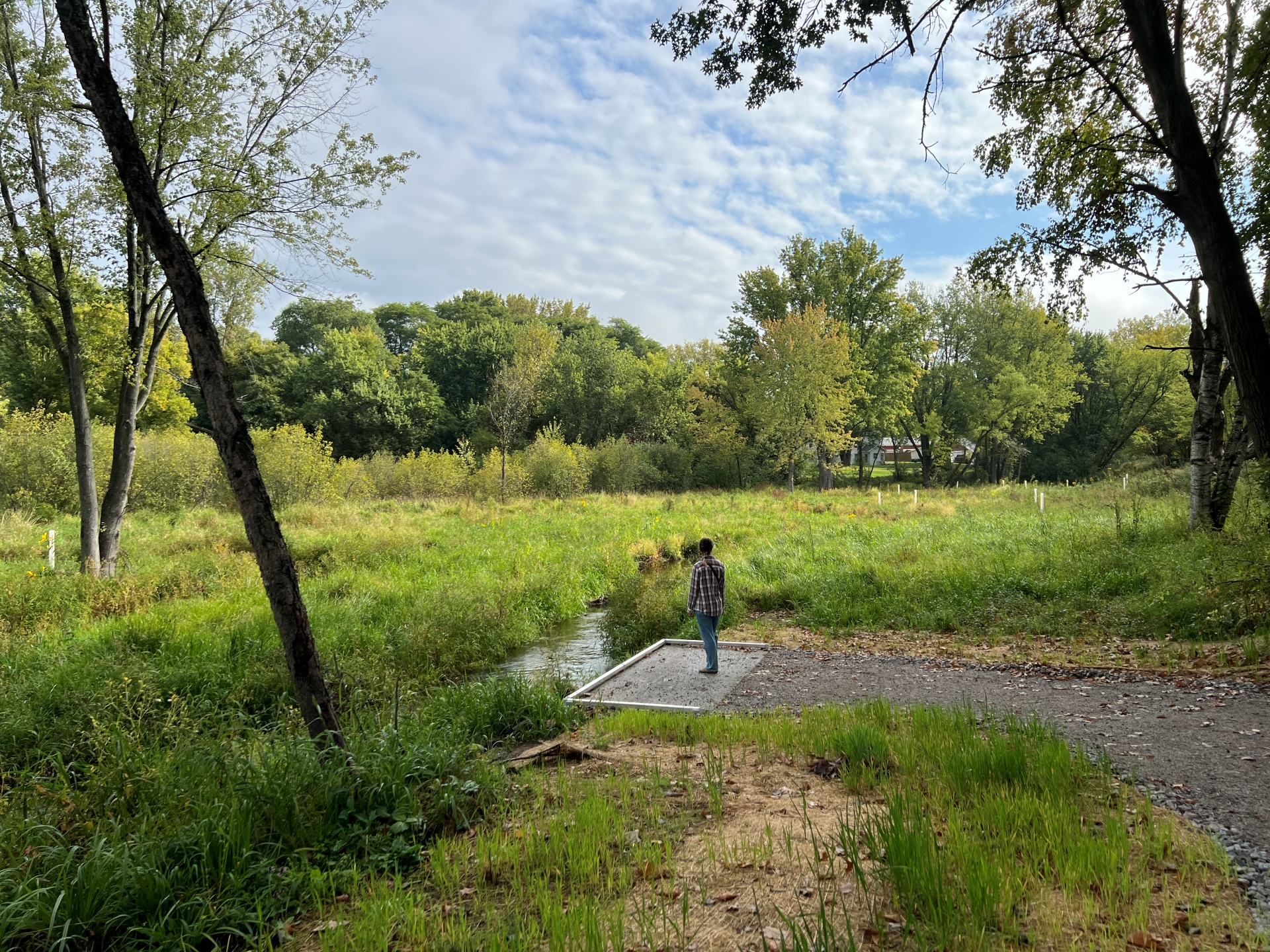
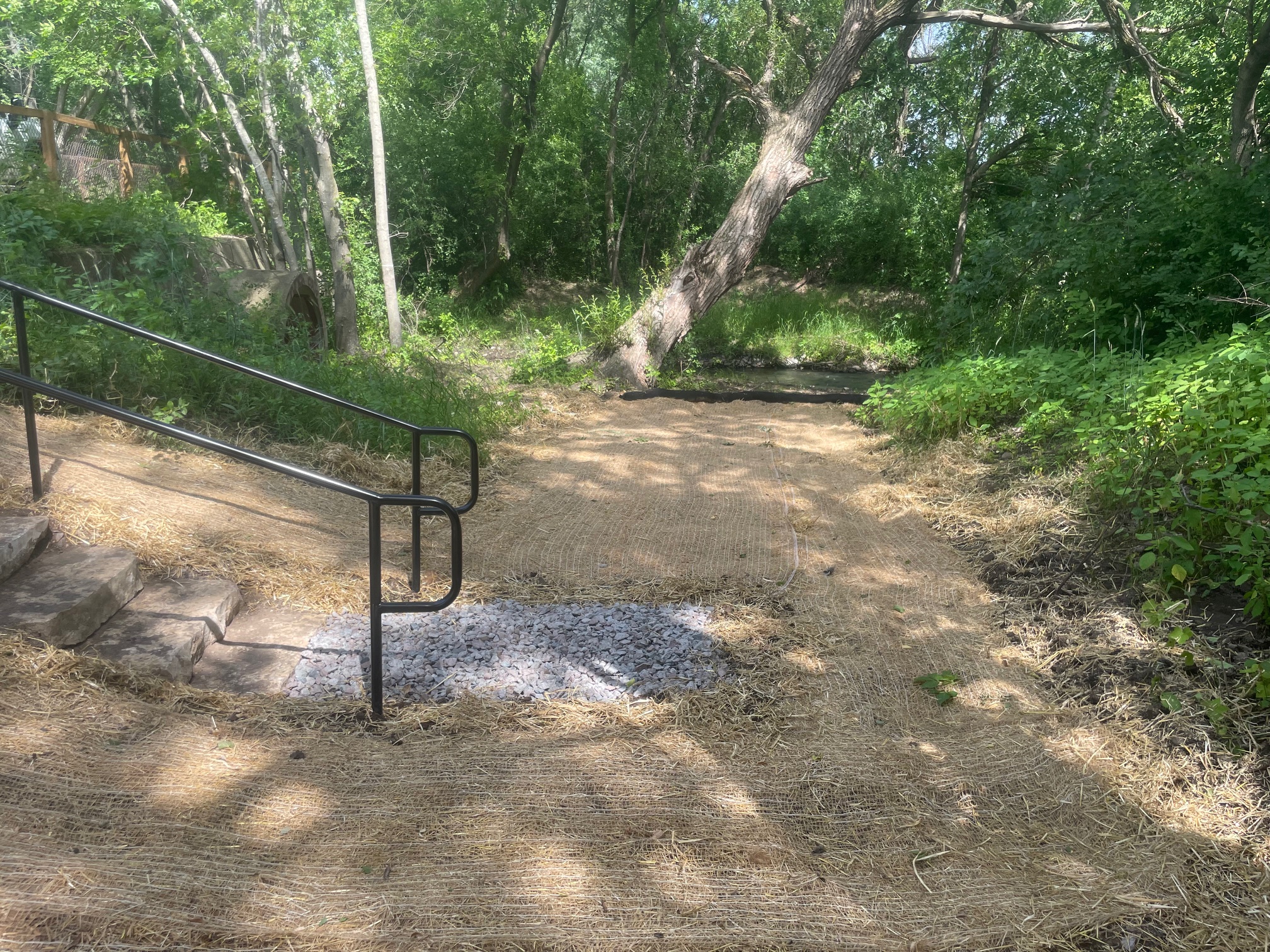
Partway through the project, the plans for the spur trail changed to include stone steps to the south of the trail and an ADA accessible fishing pier to the north of the trail. The steps and handrail, completed in June 2025, helped to stabilize the slopes that had been informally used by foot traffic to access the creek. A fully accessible trail and fishing access was added on the north side of the trail off of Neal Avenue to an area more suitable for fishing and was mostly completed by September 2025.
Additional Planting and Recreational Use (May 2026)
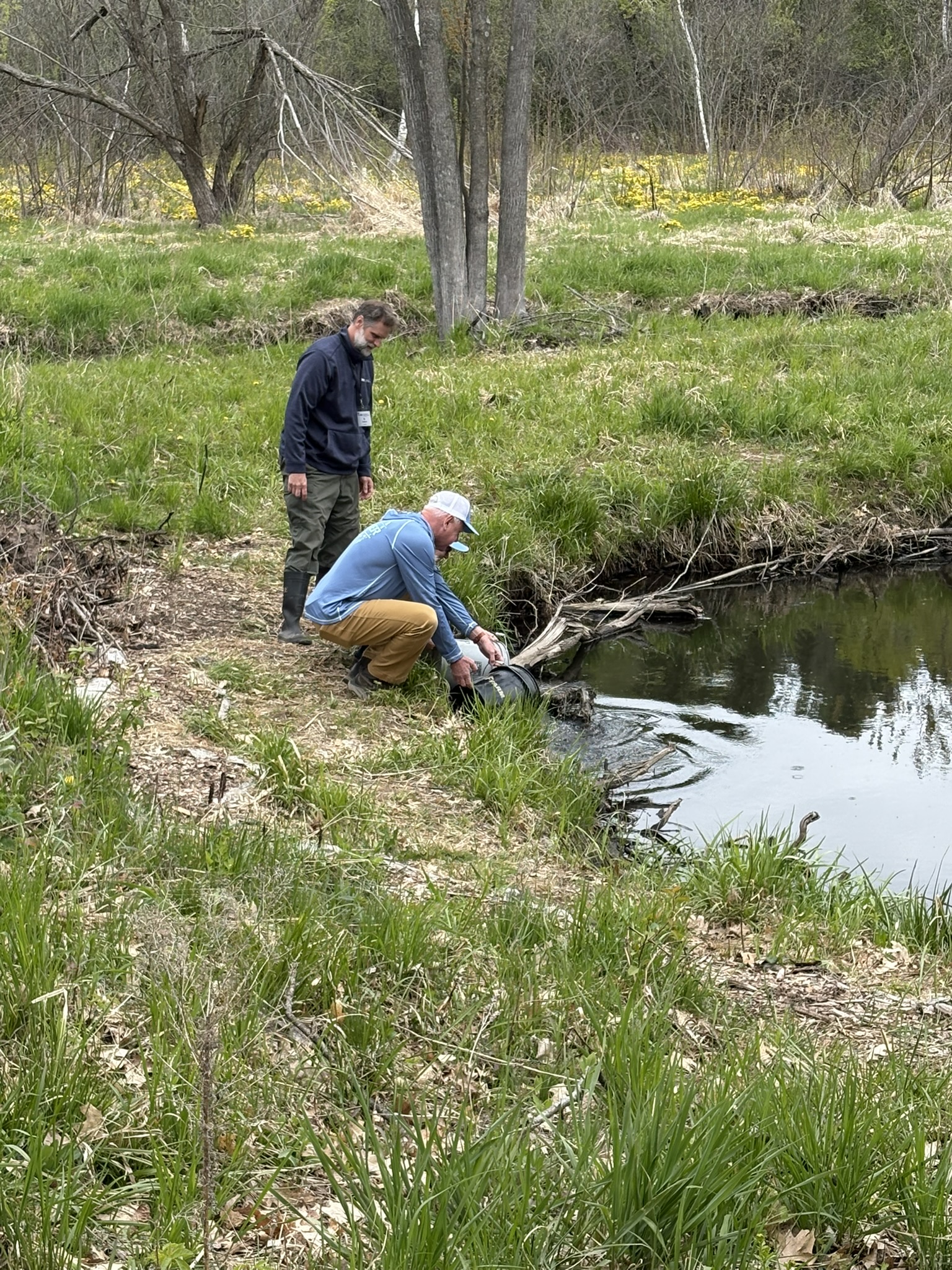
May 2026 brought more community members out to see the Brown's Creek Restoration Project. It was a stop for the Governor's Fishing Opener in Stillwater, and BCWD hosted a planting event to replace trees that did not make it through the year and supplement additional trees. The species planted included 25 Hackberry, 25 Cranberrybush, and 25 River Birch bare root seedlings.